Tuesday, October 20, 2009

Pope offers a canonical structure for Anglicans


It was announced today that a canonical structure will be made available for Anglicans wishing to enter full communion with Rome while retaining aspects of their spiritual and liturgical traditions. The announcement draws a parallel with military ordinariates, in which a group of people - members of the armed forces of a particular country - who are scattered in different places are placed under their own bishop. Another obvious parallel would be the way that Eastern Rite Catholics are looked after by their own bishops even when they live in the West. The new structure is called a 'Personal Ordinariate'. Ordinaries will normally come from among the converts themselves, who if married could not be bishops, but could still have the jurisdiction envisaged here.

This is huge news, and you can read about it all over the blogosphere; all the official documents are on Rorate Caeli.

Traditionalists should welcome this for several reasons.

First, it emphasises the imperative felt by the Holy Father to make pastoral provision for people who are seeking union with him but find obstacles in things which are non-essential to the Faith. Where by making the kind of concessions envisaged here hundreds of thousands of good-hearted people can enter the Church, these concessions should be made: that is the message of the Holy Father, very much in accordance with his remarks about avoiding schisms in the first place which he made in the letter accompanying the Motu Proprio.

Traditionalists have already been the beneficiaries of this attitude of the Pope's, which is truly pastoral. And we have reason to hope that further benefits will derive from it in the future.

Second, it emphasises the true pluralism of the Church: a pluralism of liturgy and spirituality. While so often characterised as a 'free for all', the Church since the Council in some ways has seen a remarkable diminution of this pluralism, which had been in decline since the Counter Reformation. But this is the kind of pluralism of which it was said in the Middle Ages 'Diversa, non adversa': diversity without adversity.

The Traditional Mass or usus antiquior is an example of this pluralism also.

Third, the kind of structure the Holy Father envisages is innovative, though as indicated not entirely without precedent. It represents the culmination of a lot of hard work and hard thinking by the Pope and his advisors. The way it has been presented, as an initiative of the Pope in response to the desires and needs of others which he has clearly understood deeply, is also indicative of the personal political capital he is prepared to spend on this. In fact it is staggering.

I am not sure whether to be less staggered or more in that he did something very similar with the Motu Proprio. This pontificate appears to moving up a gear!

The structure is exactly the kind of thing which for years has been discussed and rumoured about in relation to the SSPX and traditionalists in general. This will serve both as an indication of seriousness and a possible working model for reconciliation as the discussions with the SSPX draw on.

I have never been so optimistic about the propects for the reconciliation with the SSPX. Right now, however, I am happy for the Anglo-Catholics who will benefit from the Holy Father's extraordinary generosity and courage. I pray that they will be able to respond to it with the same characteristics.
Viva Papa!

TCFA Family Day at Ware

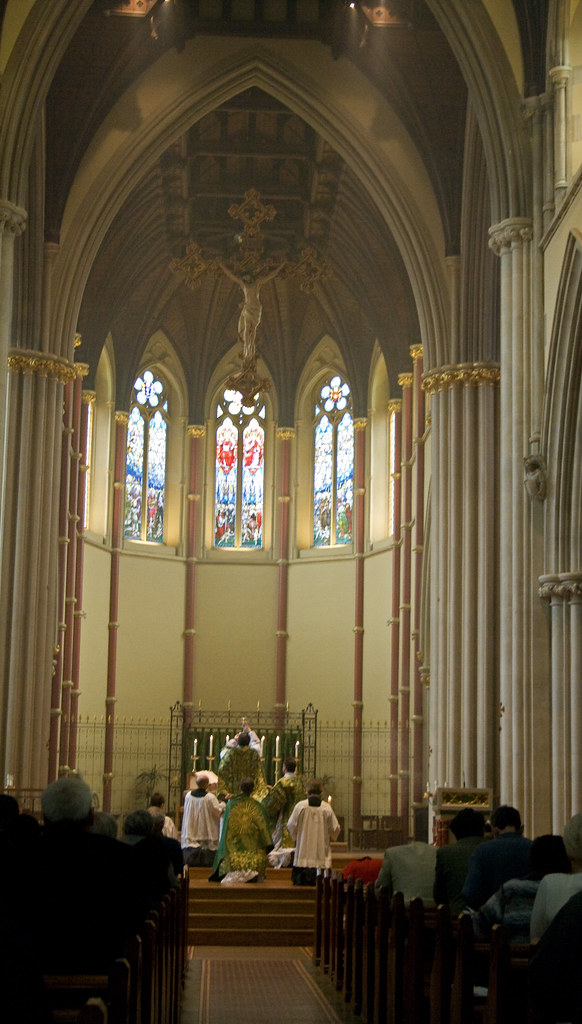
Every month the Traditional Catholic Family Alliance has a meeting for families in St Edmunds College, Ware - there are also monthly meetings at Reading. There is catechesis from a priest for all ages of children and talks and activities for everyone. I was in Ware for the meeting on Saturday.

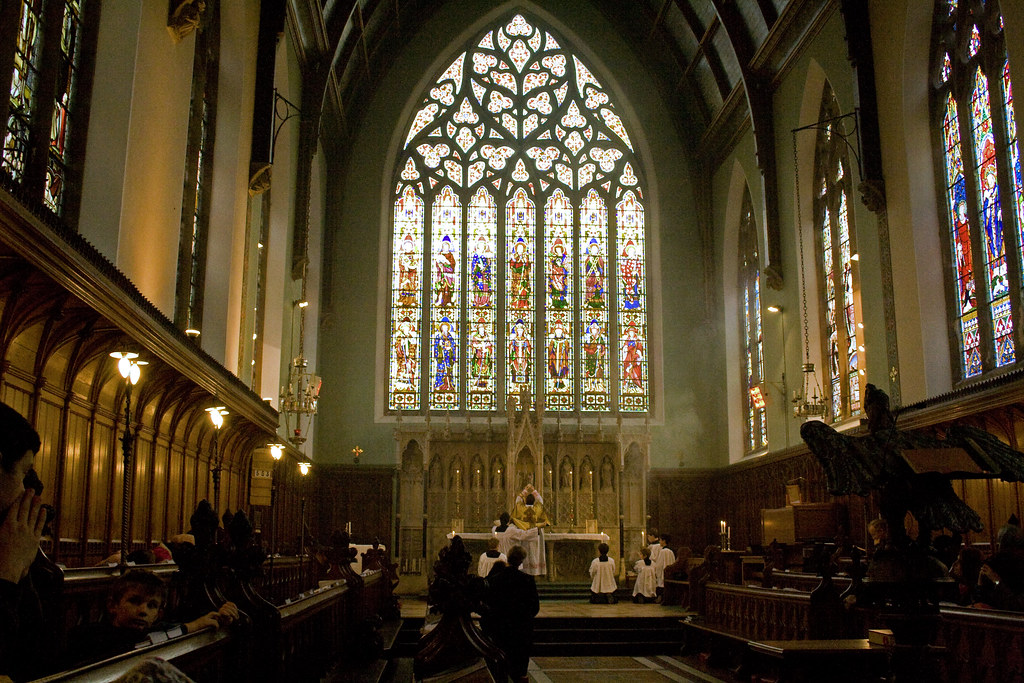
The chapel at Ware is magnificent: an unmolested Pugin creation.
2009 10 17_4529_edited-1

Sunday, October 18, 2009

Traditional Pontifical Mass in St Peter's, Rome

Te Deum Laudamus! The usus antiquior is out of the crypt at St Peter's and back upstairs.

This happened at 10am today. It is reported on Messainlatino, if you read Italian. The celebrant was Archbishop Burke, in the Blessed Sacrament chapel.

Saturday, October 10, 2009

New members for the International Federation Una Voce

The International Federatioin Una Voce (FIUV) has just announced its acceptance of four new members, in time for its biannual meeting in Rome which is taking place in November:

    UNA VOCE PERÚ
    UNA VOCE COLOMBIA,
A big welcome to them, and to Pro Tridentina - Malta which also joined recently, and Una Voce Hispania, which is a new federation of the more local Una Voce groups in Spain. In truth associations are springing up everywhere all the time, in central and eastern Europe, in Asia and Africa, and these in South America.

This growth of the number of associations is one indication of the growth of interest in interest in the usus antiquior around the world, especially since the Motu Proprio Summorum Pontificum. It is also an indication of the work which needs to be done in relation to the Traditional Mass: organising the laity, helping the clergy, and overcoming every kind of obstacle.

The Latin Mass Society is the oldest, largest and best-funded member of the international federation, and our workload is increasing by leaps and bounds. Lay groups have always assisted the Church in liturgical matters, from fund raising for bees wax carried out by medieval sodalities to associations promoting sacred music in the 1950s. FIUV's member associations carry out a vast range of these traditioinal functions in the context of the Traditional Mass, very often in a situation where no other lay (or indeed clerical) groups are willing toget involved.

Thursday, October 08, 2009

St Thérèse visits Oxford

009
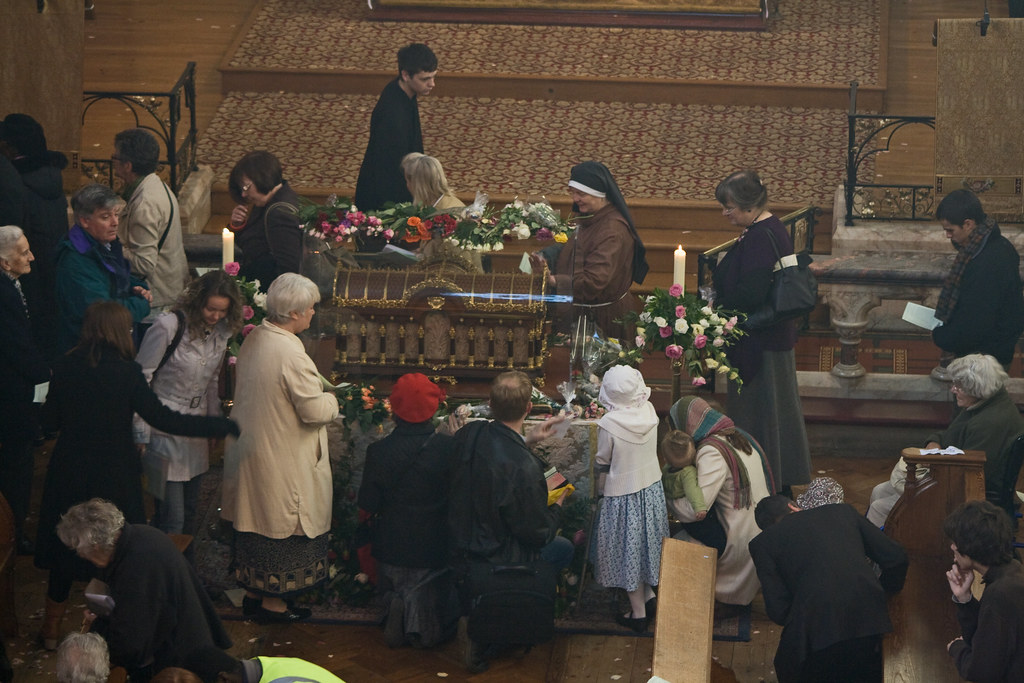
The turn-out for the visit of the relics of St Thérèse to the Oxford Oratory has been staggering. I was privileged to sing at a Traditional Missa Cantata at 8.30am and, despite the early hour, the church was packed. It seats 250 but people were crammed into the aisles and side chapels. The same was true for all the Masses and devotions of her visit; at times the queue to venerate the relics extended far down the Woodstock Road. Those passing through the church over the time of her stay must number in the several thousands; when services were not going on the church seemed continuously full simply with the continuous stream of people coming to venerate the relics.
020
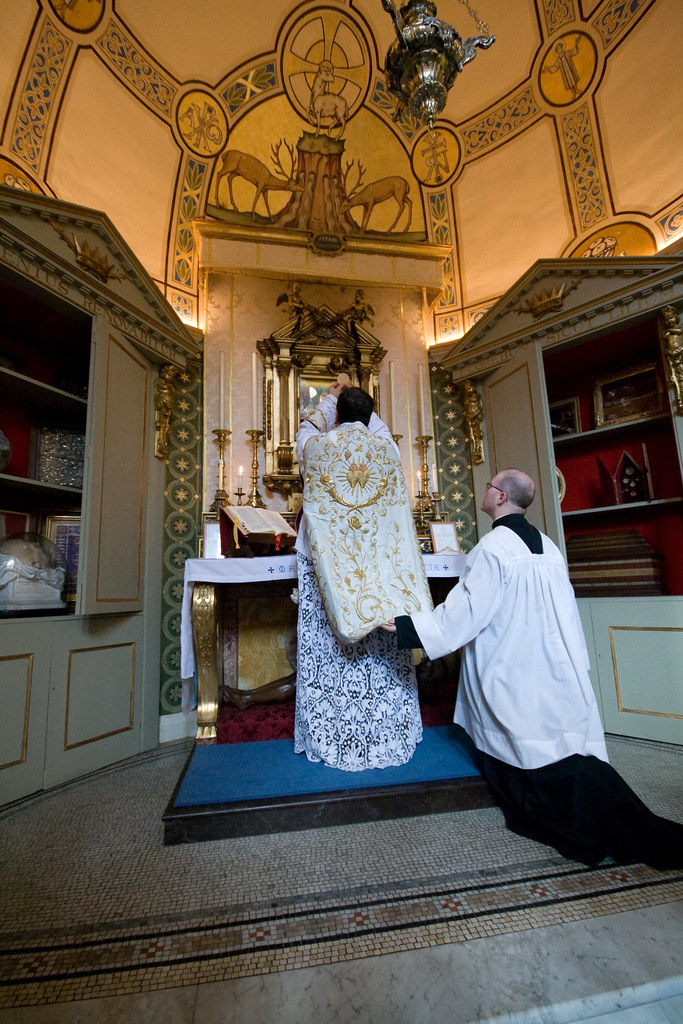
The Fathers of the Oratory have been extremely well organised and the visit proceeded very smoothly. Priests were drafted in to hear confessions, to help people gain the indulgence which has been offered to those venerating the relics. There were a great many Masses during her stay, and a vigil overnight, and priests were able to say private Masses in side chapels. Fr Andrew Southwell, well known in Oxford, travelled from South London to say a private Low Mass in the newly restored relic chapel which I attended; this was not only packed but attracted a large crowd outside the chapel of people who had been queuing to venerate the relics.
033
The visit ended with Benediction and the solemn carrying out of the reliquary; as she passed under the choir loft petals were thrown down.

This was a wonderful occasion, indeed probably a once in a lifetime event. It has brought great joy to the Catholics of Oxford - and indeed there were people there from long distances as well. Thanks are due to the forsight and hard work of the Fathers of the Oratory, and the many volunteers who marshalled the crowds and even provided refreshment and first aid.

More photographs can be seen here.

Wednesday, October 07, 2009

Traditional Catholic Wall Calendar 2010

Thanks to great deal of hard work by James Windsor, a wall calendar for 2010, with glossy colour pictures of recent Traditional Catholic events and the saints and feasts of the 1962 liturgical calendar, is now printed.

The calendar is produced jointly by the Latin Mass Society and the Fraternity of St Peter: each body provided photographs.

Copies are limited so get yours now to avoid disapointment! They cost £7 each.

They can be obtained from many LMS Reps, from the FSSP in Reading and elsewhere, and various other outlets. On the internet they are being sold by Southwell Books.

Monday, October 05, 2009

Annual Portsmouth Mass

I have now returned from some time on holiday in Scotland and then a trip to Yorkshire. Term is about to begin in Oxford but we found the time to attend the LMS Annual Mass in Portsmouth Cathedral.

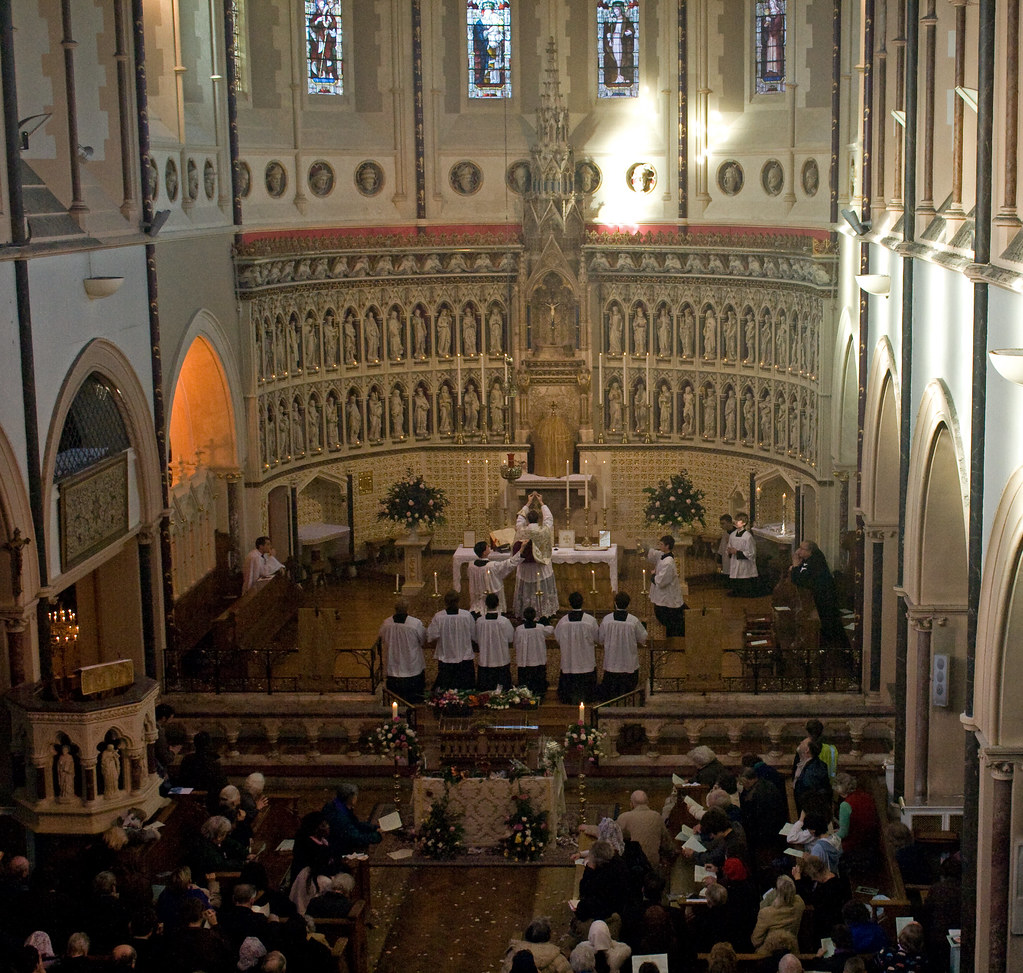
This is the tenth anniversary of these Masses (the first took place in 1999); they always take place in early October. In 2004 it was a Pontifical Mass celebrated by Bishop Rifan; this year, as usually, it was a Solemn Mass. The celebrant was Fr Andrew Southwell, and the subdeacon Fr Armand de Malleray.
2009 10 04_4374_edited-1
The deacon, Rev Mr Simon Harkins, a Fraternity seminarian who hails from Edinburgh, preached a most interesting sermon on the priesthood, pointing out the link between the day's propers and the Ember Saturday which would originally have preceded it. This link throws into perspective the story of Our Lord curing the man with the palsy by forgiving his sins: this is the Gospel of the day because it is a priestly action.

The Cathedral was restored not long ago and is a magnificent building; it is wonderful to see a Solemn liturgy here. The Mass was well attended and was accompanied by Haydn’s 'Missa Brevis St Johannes de Deo' to mark the 200th anniversary of the composer's death; this was sung by the Cantores Michaelis directed by Keith Davis.
2009 10 04_4389_edited-1
Congratulations to the local LMS Rep, David Joyce, for organising this Mass as he has for many years, and thanks to Richard Luzar for the loan of these vestments, which are brand new.

For more photographs see my Flickr page.