Showing posts with label Reception of the Chalice. Show all posts

Tuesday, December 02, 2014

The Chalice and hygiene

Letter of the week: from The Tablet

I have been following the correspondence about receiving from the chalice. I qualified as a dentist in 1959 just as reusable needlespassed into history but boiling water steriliserswere the norm.

Over the years, the worries concerning cross-infection became more dominant and the use of autoclaves became essential. Soon after, the Church permitted Reception of Communion under Both Kinds.

I well remember discussing with a priest that I felt this was odd because HIV/Aids was becoming evident and the method of its spread was not then known. He actually agreed but we left it there.

We now know that HIV/Aids is not spread orally but herpes and hepatitis can be and nowadays we have the arrival of ebola which is transmitted in body fluids.

I have been asked on many occasions why I do not take the chalice and my standard reply is that I have spent thousands of pounds preventing, as far as I can, cross-infection and wiping the chalice between communicants cannot be construed as such a practice. Intinction must be a better solution. Perhaps we can look forward to it becoming standard practice in the near future.

Paddy Chronnell, Cheltenham, Gloucestershire

Saturday, January 25, 2014

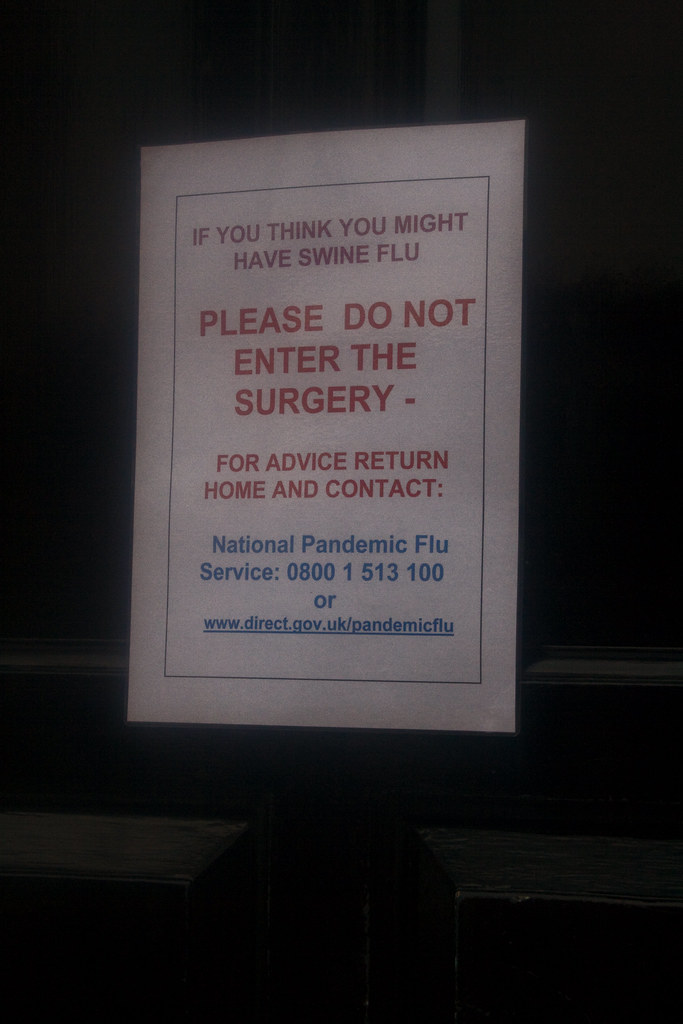
The Universe garbles story about H1N1

Texas, to the North and East of Mexico.
An alert reader from the USA has identified the source of the story about H1N1 ('Swine Flu') which appeared last weekend in the Catholic Universe, which I, thinking it was a bit fishy, reported verbatim on this blog.

I realise that all newspapers make mistakes, but this is real howler. Cheerily chopping out the 'TX' for 'Texas' in the opening line of the story, the subeditor began to wonder where exactly the story is from. Seeing a reference to 'Rio Grande', he jumped to the conclusion it was about Mexico. Mexico! Has the Universe not caught up with Texas' independence from Mexico in 1835?

Then the story has been made to say that Communion has been suspended completely, and not just the Chalice, which is completely wrong.

Even more troubling, from a professional point of view, the reference to the news agency which composed the story in the first place, and the journalist (Ms) Alex Stockwell, has been chopped, even though it is clearly just a (badly) edited version of it. Are newspapers supposed to do this?

Come on, Editor Joseph Kelley! Let's have a correction.

Original story: The H1N1 virus is spreading rapidly across the Valley, prompting everyone from doctors to teachers and now priests to take extra steps in preventing the illness from infecting more people.


In a traditional Catholic Mass, the Precious Body and Blood of Christ are consumed by parishioners, but with the H1N1 flu, some churches are not serving the Blood of Christ, which is taken from a communal chalice.
Chilies are eaten in both places,
so perhaps it doesn't matter.

Universe version: Rio Grande: Growing concern over the spread of the H1N1 virus has prompted the Mexican Church to change the way the Mass is delivered. To prevent the transfer of the virus, some priests are not serving the Blood of Christ from a communal chalice, while others have have further and stopped giving Communion completely. 

Original story: "Some parishes, because of the epidemics or for logistical reasons, decide not to have communion under both species," said Rev. Msgr. Heberto Diaz of the Diocese of Brownsville.  "And that's up to the local pastor of each of the parishes.  If someone is ill, then they shouldn't receive from the chalice."

Universe version: "Some parishes have decided not to have Communion," said Rev Mgr Heberto Diaz of the diocese of Brownsville. "And that's up to the local pastor of each of the parishes. If someone is ill, then they shouldn't receive from the chalice." 

Original story: Another custom in Mass that is being adjusted is the "Sign of Peace" before Communion, where people shake hands with one another and wish each other peace.

"In the past when we had this H1N1 epidemic, what we did is we asked people if they were sick not to shake hands with each other but to maybe bow as a form, as a gesture of like shaking hands, of community," explained Rev. Msgr. Diaz.

Universe version: Parishioners are also being discouraged from shaking hands at the 'Sign of Peace' before Communion, which can also transfer the H1N1 virus. 

Original story:  Monsignor Diaz says the best way that churches can help the spread of the flu virus is by reminding parishioners that it's perfectly fine to miss church if they are sick.
"It's not a sin to not come to church on Sunday if you're ill, so that's another thing people really need to know if they're ill or if they feel like they could be contagious to others."

When the Mexican attempt to regain control of Texas
was defeated, in 1836. Texas joined the USA in 1845.
Universe version: Mgr Diaz says the best way that churches can help prevent the spread of the flu virus is by reminding parishioners that it's perfectly fine to miss church if they are sick. "It's not a sin not to come to church on Sunday if you're ill, or if you feel you could be contagious to others," he said.

Sunday, January 19, 2014

H1N1 prompts bans on Communion under Both Kinds in Mexico

I can't find this story online, but it is in the print edition of the Catholic Universe, 19th Jan 2014.


Virus Prompts Mass Change


Rio Grande: Growing concern over the spread of the H1N1 virus has prompted the Mexican Church to change the way the Mass is delivered. To prevent the transfer of the virus, some priests are not serving the Blood of Christ from a communal chalice, while others have have further and stopped giving Communion completely. 


"Some parishes have decided not to have Communion," said Rev Mgr Heberto Diaz of the diocese of Brownsville. "And that's up to the local pastor of each of the parishes. If someone is ill, then they shouldn't receive from the chalice." 


Parishioners are also being discouraged from shaking hands at the 'Sign of Peace' before Communion, which can also transfer the H1N1 virus. 


Mgr Diaz says the best way that churches can help prevent the spread of the flu virus is by reminding parishioners that it's perfectly fine to miss church if they are sick. "It's not a sin not to come to church on Sunday if you're ill, or if you feel you could be contagious to others," he said.

This seems unusually badly written, and I don't want to attribute too quickly to the bishops of Mexico the strange claims or terminology implied in the report. I assume it has been through some kind of news agency, though the Catholic Universe does not say what the source is.

(No, it is not 'up to each pastor' to refuse Communion to the entire parish at whim - such a thing would only be licit of the Bishop had issued a decree, effectively calling an emergency situation.)

It is interesting that the H1N1 / Communion Under Both Kinds issue hasn't gone away. In England we had all this back in 2009. The people still determined to ignore the public health aspects of the question are going to feel increasingly beleaguered.

To reiterate what the FIUV Position Paper on the general issue of Communion under One or Both kinds said, the hygiene problem is not with the early Medieval Western practice of reception from the Chalice (using a straw) in small congregations once or twice a year. The problem is certainly not with Vatican II's suggestion that one or a few people receive from the Chalice in addition to the priest once or twice in a lifetime. Nor is the problem with the Eastern practice of intinction using a spoon which does not touch the Communicant's lips or tongue. The problem is with the practice unique to the Latin Church after 1970, in direct contradiction of the liturgical law of the 1970s and early 1980s, until they gave up trying to enforce it, of large congregations receiving the Chalice (with little solemnity) every Sunday of the year.

Read the Position Paper here.

- Posted using BlogPress from my iPad


Friday, December 06, 2013

Communion under Both Kinds: or not.

IMG_2704
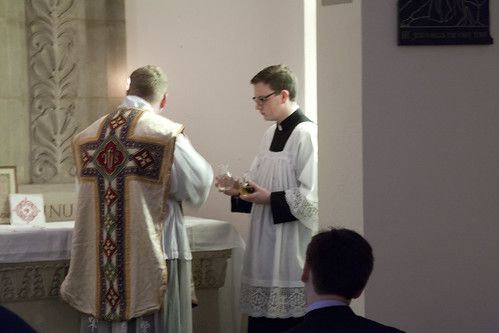
The Preparation of the Chalice by the Celebrant
I have just posted a Position Paper on the Extraordinary Form's not allowing Reception of Holy Communion Under Both Kinds - ie, you receive only the Host. Go over there to read it.

It is one of those issues where, for many years, I quite liked what happens in the Ordinary Form. I can't say I missed it when I started going to the EF, there are so many differences with the OF that it hardly seemed important, but as I've been thinking about this over the years, and especially after researching for this Position Paper, I have come to the conclusion not only that the EF practice shouldn't be changed, but that there is a problem with the practice of the OF.

The Position Paper goes into all the details, here is a little more on three salient points.

1. The current practice, familiar in England and Wales and throughout Europe and North America, is not the restoration of an ancient practice in any precise sense.

2. The current practice was not called for by Vatican II.

3. The current practice is incompatible with the traditional respect due to the Sacred Vessels.
IMG_2716
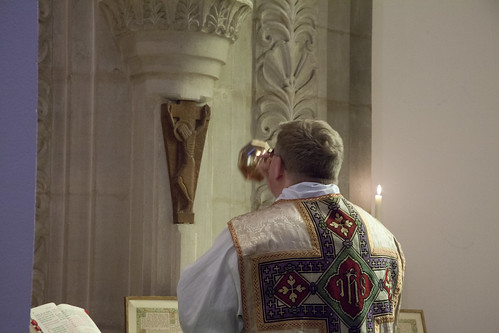
The Celebrant receives the Precious Blood
1. The business of everyone queuing up and taking the Chalice in their hands from an Extraordinary Minister of Holy Communion is NOT what happened in Early Church - at least, as far as we know, or can reasonably infer. The earliest practices we know about are intinction and the use of a special metal straw, the fistula. Yes, the laity received the Precious Blood using one of these methods in antiquity, but by the time we hear about this (the 7th century) the frequency of reception was only a few times a year. This puts a number of practical issues in a very different light: reverence, the time it takes, the number of people needed to distribute it, and issues of hygiene. To restore the distribution of the Precious Blood, without intinction or the fistula, in the context of frequent Communion, large congregations, and Extraordinary Ministers, makes it a very different experience with very different pastoral implications.

2. The decree on the liturgy, Sacrosanctum Concilium, in para 55 suggested the distribution of the Precious Blood in three possible cases. The list was not intended to be exhaustive, but illustrative. What does it illustrate? Remarkably, all three cases are once-in-a-lifetime events: a baptism, a religious profession, and an ordination. It wasn't for everyone to receive from the Chalice on these occasions, just the newly baptised, professed, or ordained. This looks like a late Medieval monarch having the privilege - as they sometimes did - of receiving from the Chalice at his Coronation. The current practice is something completely different: to repeat, it has completely different pastoral implications. (This point about Communion Under Both Kinds and the Council has also been made recently by Peter Kwasniewski on the New Liturgical Movement blog.)
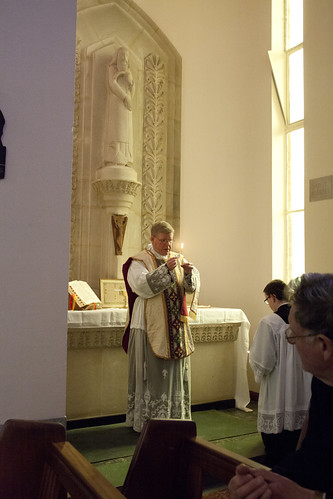
IMG_2717
The celebrant presents the Host to the Faithful
3. One of the things which had to change, to make possible the current Ordinary Form practice, is the attitude to the Chalice itself. Traditionally, this was not just blessed but 'consecrated' to liturgical use, and the sense of the special nature of the Chalice was such that it was out of the question for lay people to touch it with their bare hands. (In cases of necessity a lay sacristan would use a cloth or gloves.) This is not one of those 'late Medieval superstitions' the liberals like to talk about, it goes back at least to the time of Gregory Nazianzen, who died in 389 or 390 AD, who himself didn't invent it but rather took it for granted. The rules in Canon law and the General Instruction underwent a revolution in the respect after Vatican II; now anyone can touch anything. Canon 1171 simply cautions that the Sacred Vessels 'are to be treated reverently and are not to be employed for profane or inappropriate use.' If we are serious about restoring reverence for the Blessed Sacrament, this is one area which is in need of attention. You can't reap, in reverence, what you haven't sowed, in the established practices of the Church. But this diminution of the reverence for the Chalice was necessary if people were to pick it up and receive from it.

The EF has something to teach the whole Church here: we keep, as liturgical principles, rules which bound the whole Church for at least sixteen centuries. We are the guardians, if you like, of the Church's memory.
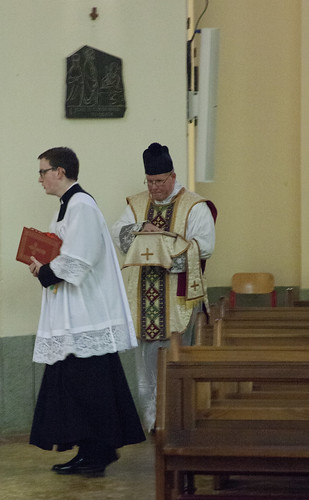
IMG_2727
At 'private' Masses it is the priest who carries the Chalice,
under the burse and pall, to and from the Altar, while
the server carries the Missal.
Photos: A Low Mass at the LMS Priest Training Conference in Ratcliffe College, Leicester.

Tuesday, September 01, 2009

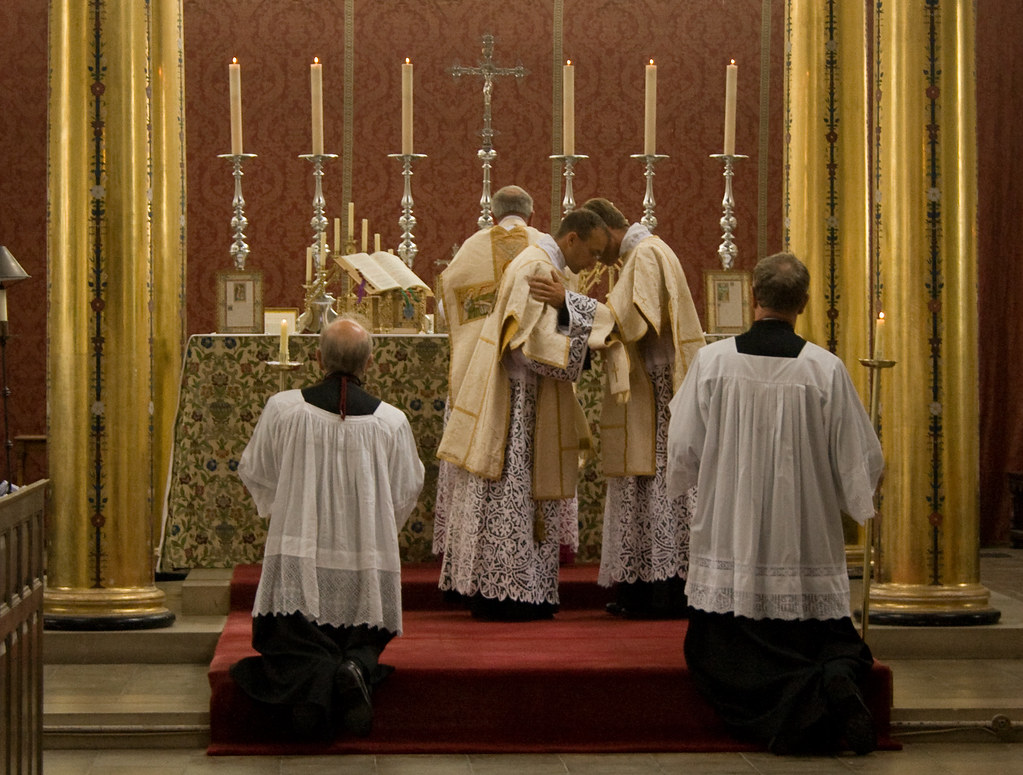
Swine Flu compliant kiss of peace

IMG_0033_edited-1

Readers will be pleased to hear that there was no distribution of the Chalice at the London Colney conference, and none of that potentially lethal activity, which I fancy finds no place in the most ancient liturgical books, the collection of grubby notes and coins at the Offertory.

Lewes GP