have a look at this - it's fun.
H-t Love Undefiled via Catholic and Loving It.
Wednesday, March 31, 2010

Monday, March 29, 2010
Sacred Triduum in Reading
The closest place to Oxford where you can get the Sacred Triduum in the usus antiquior is Reading, where the two priests of the Fraternity of St Peter based there will be joined by a seminarian who is a Sub-Deacon so they will be able to celebrate solemn liturgies.
I will be there - singing! Please join us.
| Maundy Thursday | 1st April | 9am-10am 10am 7.00pm | Confessions Tenebræ Solemn High Mass, followed by Adoration at Altar of Repose |
| Good Friday | 2nd April | 9am-10am 10am 1:30pm 3pm | Confessions Tenebræ Solemn Stations of the Cross Solemn Liturgy |
| Holy Saturday | 3rd April | 9am-10am 10am 2pm-4pm 10pm | Confessions Tenebræ Confessions Solemn Easter Vigil followed by Solemn High Mass |
| Easter Sunday | 4th April | 11am 5pm | Solemn High Mass Sung Mass (in Flitwick, Sacred Heart Catholic Church, Pope Close, Flitwick MK45 1JP) |
Tuesday, March 23, 2010
Gerald Warner on the sex-abuse scandal
Gerald Warner has generated a lot of comment with his rumbustious post suggesting that clerical sex abuse was fed by the more general crisis following Vatican II.
Much of what he says is true, and well expressed. Putting the current scandal into a wider context is exactly what is needed, in order to understand it.
But let me take that a little further. Fr Ray Blake points out that some of the sex abuse cases date from the 1950s, and this seems to stop Warner's analysis in its tracks. But the wider point is, to put it paradoxically, the post-Vatican II crisis did not start with Vatican II. If it had, then the things which happened after the Council, and indeed many of the things which happened during the Council, could not have happened.
This is true even in terms of the liturgy: permissions were being handed out by the Holy See all over the world for practices we think of as post-conciliar. It is true doctrinally: although the Holy Office, under Cardinal Ottaviani, was keeping a lid on things much more effectively in the 1950s than was the case later, dissent among theologians was rife, and when the world's most interesting theologians were gathered in Rome for the Council, the Acts of the Council record the continuous effort of emmendation necessary to keep the more crazy ideas out of the final documents.
And it is true in terms of clerical discipline. Freud's influence was enormous in the 1950s. The idea that all problems are the result of sexual repression was widespread among the intelligencia; it simply hadn't spread to popular culture. The apogee of vocations in the middle of the century itself suggests a certain reckless expansionism among religious orders and dioceses, and a failure of quality control.
The same battle was being fought then as is being fought now: between the traditional teaching and spirituality of the Church, and a set of ideas derived from 'progressive' secular thinking on sex, self-control, the reality of the supernatural, and how to 'sell' the faith the 'young'. The sex abuse may not have started in 1965, but it remains bound up with the progressive thinking which was latent before the Council, and triumphed after it.
And here is something else. Warner tells us that the only functioning aspect of clerical discipline exercicesd by bishops in the Council's aftermath was the unjust repression of the Traditional . Latin Mass. This is a simplification. In actual fact, a huge number of changes wrought by priests and bishops following the Council were rammed through in a breathtaking display of clerical power. The imposition of the 1969 Missal, as has often been pointed out, was the most extreme exercise of Papal authority in the history of the Church. It would have been simply inconceivable to Innocent III, the most powerful Pope of the Middle Ages. After the Council power was used recklessly: think of the destruction of church buildings, changes to devotional practices, reforms of the Rules of religious orders. It was of course sincerely believed to be for the good of the Church, but it was used without consultation or constraint to make irreverable changes which broke the hearts of millions of faithful Catholics, and did great damage to the Church. This is a characteristic of the 20th Century Church, not only of the post- or pre-Conciliar period.
The sex abuse scandal is not just about the lack of discipline imposed by bishops over their priests. It is about the abuse of clerical power. Sex abuse is itself about the abuse of power: the power of a teacher or a parent, or the power of a priest, over a child. The bishops whose response to the situation has caused the Holy Father such grief went on to abuse their power in other ways: to protect their priests, they imposed silence on the victims and their families, they disciplined whistle-blowers, and they moved abusive clergy to new positions. James Preece has written about this phenonemon here, calling it a 'culture favourable to abuse'.
Bishops and religious superiors were doing this before the Council, and they did it more and more as the situation deteriorated after it. This is not the traditional situation in the Church, it is a 20th Century abberation. Thankfully, it is crumbling today, because bishops and superiors no longer command the deference, legal privilege or resources to behave in this way.
The abuse of power may not seem like a 'progressive' phenonomenon, and of course power can be used for different purposes. But 'progressive' ideas by their nature do not come from the bottom up; they are dreamt up by an intellectual elite, which then seeks power to impose them from the top down. The concentration of clerical power in the 20th Century made the destruction of traditional liturgy and spirituality possible, while at the same time incubating of the sex abuse crisis.
Pro-Life Prayer Witness in Oxford
 Saturday 27th March, 3pm-4pm
Pro-life witness in reparation for all unborn babies and their families, and all the Drs and nurses involved in the evil of abortion.
Meet at the Church of St Anthony of Padua, Headley Way, Oxford. (Car parking available), where there is Exposition of the Blessed Sacrament inside the Church for the hour that we witness.
We then stand in front of the Church at the entrance to the JOHN RADCLIFFE HOSPITAL, Headley Way, Oxford.
The Rosary is led by Fr John Saward and then we end with a short Benediction inside the Church.
Refreshments are available afterwards in the Church hall.
For anymore information please contact Amanda Lewin 01869 600638

Friday, March 19, 2010
Sex abuse and the priesthood
The recent revelations of sex abuse among the clergy in Germany and elsewhere, coming on top of the exhaustive report on the subject in Ireland, and the long-running crisis in the United States, has whipped the secular press up into a characteristic frenzy. They are right to be outraged at the betrayal of trust by priests, and the failure of religious superiors and bishops to deal with the matter appropriately. A systematic attempt is being made, however, to link the scandals to the Holy Father, and to the celibate priesthood.
Neither of these attempts stand up to scrutiny. On the first, Pope Benedict had only the most remote connection with a sex offender priest from the diocese of Essen who stayed in Munich for treatment when Joseph Ratzinger was Archbishop. It is not clear that the details of this priest's offenses were even given to the Munich authorities. The attempt to involve the Pope's brother Georg is equally tenuous: he taught at a school where sex abuse was going on--no one has a shred of evidence he either perpetrated it or covered it up. These kinds of attacks are inevitable, perhaps, but they leave the reputation of the journalists and newspapers involved looking more battered than that of the Holy Father.
John Allen has written a fascinating article on how the Holy Father was in fact personally responsible, when Prefect of the CDF, for a massive shift in attitude at the Vatican towards taking the sex abuse crisis seriously. This really deserves to be read.
On the question of clerical celibacy, this is the most long-running theme of the media's take on the abuse crisis. The secular media can't understand celibacy, and the notion of a clergy set apart by celibacy, like all holy things, worries them. But the argument simply doesn't work. Most sex offenders are not bound by any rule of celibacy. Some are. Some are unmarried, plenty are married. Some are not interested in the opposite sex. Since the possibility of marriage doesn't solve the problem of lay sex abuse, why is it imagined it would solve the problem of clerical sex abuse?
What is true is that clerical status affords special opportunities for abuse. So does the teaching profession. So one sees abusers specially attracted to those professions, and it is up to those in charge of their training to weed them out. This is something liberals, both inside and outside the Church, have been unwilling to do over the last forty years, and we are reaping the consequences.
The problem of priests and teachers who lack a genuine vocation and lack moral fibre goes back a long way, but before the 1960s it seems to have manifested itself in brutality more than in sexual predation. Sexual predation has come to the fore as the taboos against it have weakened--at exactly the same time as taboos against physical brutality have become established. The same people who say you shouldn't touch a child to control or chastise him defended the possibility of having a mutually rewarding consensual sexual relationship with him. (New Labour starlets Hewitt and Harman were talking about such things back in the early 1980s.)
That kind of talk has, to a remarkable extent, been silenced by the sex abuse revelations. One must not forget how common it was, from the 1960s to the 1990s. A series of attempts were made to gain UN recognition for groups campaigning for the legalisation of paedophilia, well into the present century. The imposition of 'non judgemental' sex education on our schools even today is left over from this general movement. Specifically, the 'let it all hang out' approach to counselling was actually imposed on many religious orders and dioceses in the wake of the Second Vatican Council, with priests preaching on sexual morality and wanting to say the Traditional Mass alike being condemned as too 'rigid'. (And seminarians showing signs of 'rigidity' being ruthlessly ejected.)
If you want it from the horse's mouth, listen to this fascinating talk by Dr William Coulson (alternatively, here's a short interview), who took the psycho-analytic techniques of Carl Rogers to religious communities ion the 1970s, and is convinced that sexual abuse followed. Rogers' approach is to say 'follow your bliss' - 'do what feels right'. It turned out that some of the clergy who had been stopping themselves from following their natural urges, and stopped bothering after listening to this, had been following the norms of Natural Law which protect the innocent. Carl Rogers had forgotten about Original Sin.
Saturday, March 13, 2010
Easter Triduum Services
The number of Easter services in the usus antiquior has been increasing in leaps and bounds in recent years. Here is a pretty comprehensive of Easter Triduum services list for England and Wales. There are more Masses listed here.
London Masses
Corpus Christi, Maiden Lane, WC2
Monday 29 March 6.30pm Sung Mass
Tuesday 30 March 6.30pm Sung Mass
Wednesday 31 March 7.00pm Tenebrae
Sacred Triduum
Holy Thursday 1 April 6.30pm Sung Mass and Procession to the Altar of Repose
Good Friday 2 April 3.00pm Good Friday Liturgy
Holy Saturday 3 April 7.00pm Vigil and High Mass
The Oratory, Brompton Rd, SW7
Palm Sunday 28 March 9.00am Low Mass
Easter Sunday 4 April 9.00am Low Mass
St James, Spanish Place, George St, W1
Palm Sunday 28 Mar 9.30am Low Mass
Easter Sunday 4 April 9.30am Low Mass
St Mary Magdalen, East Hill, Wandsworth SW18
Palm Sunday 28 March 11.00am Sung/Low Mass
Easter Sunday 4 April 11.00am Sung Mass
St Thomas Aquinas, Ham Common, Ham
Palm Sunday 28 March 6.00pm Blessing of Palms and Sung Mass
Partial Sacred Triduum
Good Friday 2 April 5.00pm Good Friday Liturgy
Easter Sunday 4 April 6.00pm Low Mass
St Bede's Clapham Park (some services in the Chapel of La Retraite School)
Chapel La Retraite School Atkins Rd Clapham, SW12
Palm Sunday 28 March 10.30am Blessing of Palms Procession and Mass *
Sacred Triduum
St Bede’s Thornton Road Clapham Park London SW12
Holy Thursday 1 April 6.00pm High Mass and Procession to Altar of Repose
Chapel La Retraite School Atkins Rd Clapham, SW12
Good Friday 2 April 3.00pm Good Friday Liturgy *
Holy Saturday 3 April 7.00pm Vigil and Solemn Mass *
*Please call 020 8678 5128 to confirm times of the Masses and Good Friday Liturgy
at La Retraite School
St Bede’s Thornton Road Clapham Park London SW12
Easter Sunday 4 April 10.45am High Mass 5.00pm Solemn Vespers and Benediction
Chapel of the Hospital of St John and St Elizabeth 60 Grove End Rd St John’s
Wood Please see here
Sacred Triduum Ceremonies in other Dioceses
Brentwood
Holy Thursday 1 April St Antony, St Antony’s Rd, Forest Gate, London E7 6.30pm
Sung Mass & Procession
Good Friday 2 April St Antony, St Antony’s Rd, Forest Gate, London E7 12.30pm
Good Friday Liturgy
Holy Saturday 3 April St Nicholas Gladding Rd Manor Park London E12 5.00pm
Vigil and First Mass of Easter
Plymouth
Lanherne Convent St Mawgan Nr Newquay Cornwall
Holy Thursday 9 April 7.00pm Mass and Procession to Altar of Repose Adoration to
12 Midnight
Good Friday 10 April 3.00pm Good Friday Liturgy 7.00pm Stations of the Cross
(outdoors weather permitting)
Holy Saturday 11 April 8.30pm Easter Vigil and Sung Mass
Portsmouth
St William of York, Upper Redlands Rd, Reading
Holy Thursday 1 April 7.00 pm Mass & Adoration
Good Friday 2 April 3.00pm Good Friday Liturgy
Holy Saturday 3 April 10.00pm Vigil & Mass
Shrewsbury
Sacred Heart Church, The Cross, Moreton, Wirral CH46 9QB
Holy Thursday 1April 5.00pm Mass & Procession
Good Friday 2 April 5.00pm Good Friday Liturgy
Holy Saturday 3 April 5.00pm Vigil & Mass
Palm Sunday and Easter Sunday
Thursday, March 11, 2010
LMS Pilgrimages in 2010
Here are the dates and times of the national and local LMS Pilgrimages around the country. These are a real testament to the work of the LMS' local representatives, who organise them.
They are wonderful occasions. Please support them!
LMS Pilgrimage Schedule for 2010
May
Sat 15 Pilgrimage to Our Lady of Consolation Park Lane West Grinstead
Details to be confirmed. Contact Peter Cullinane on 02392471324 (Shrine - picture)
Sun 23 Welsh National Pilgrimage to Shrine of Our Lady of the Taper,
Our Lady of the Taper, North Road, Cardigan.
Tbc 2.30pm Holy Hour, Benediction and Mass
Details: Steffano Mazzeo on 01597 840634 (Shrine - second picture)

June
Sat 26 LMS Annual Mass, Pontifical Mass Westminster Cathedral 2pm.
Celebrant: Bishop Alan Hopes (AGM in the morning)
July
Sun 4 National Pilgrimage to Holywell
St Winefride’s, Well Street, Holywell. Mass at 2.30pm followed by Procession to
St Winefride’s Well Devotions and Veneration of the relic and Benediction
Details: Steffano Mazzeo on 01597 840634
or Simone Sunderland on 01686627909 (Shrine - picture)
Sun 24 Pilgrimage in honour of SS John Lloyd & Philip Evans
St Peter’s, St Peter St, Roath, Cardiff. Sung Mass and Procession 3.00pm
To be confirmed. Contact Andrew Butcher on 07910930788
September
Sat 4 Pilgrimage to Brinkburn Priory
Brinkburn Priory, Nr Rothbury, Northumberland. Mass 12 noon
To be confirmed. Contact David O’Neill on 0191 2645771 (Priory)
Sat 4 Pilgrimage to Glastonbury
Church of Our Lady, Magdalene St, Glastonbury. Mass at 12 noon
Benediction 2.15pm followed by Rosary Procession
To be confirmed. Contact Nigel Taylor on 0117966 9976 (Abbey)
Sat 11 LMS National Pilgrimage to Walsingham
Rosary Procession from Friday Market 2.00pm Sung Mass 3.30pm
Details: LMS office on 020 7404 7284 (Catholic Shrine - picture)
October
Sat 16 St Richard Gwyn Pilgrimage Wrexham
To be confirmed. Contact Steffano Mazzeo on 01597 840634
or Simone Sunderland on 01686627909
Sat 23 Oxford Martyrs Pilgrimage.
Solemn Mass in Blackfriars and procession
Details: Joe Shaw on 01993 812874 (Report - picture)
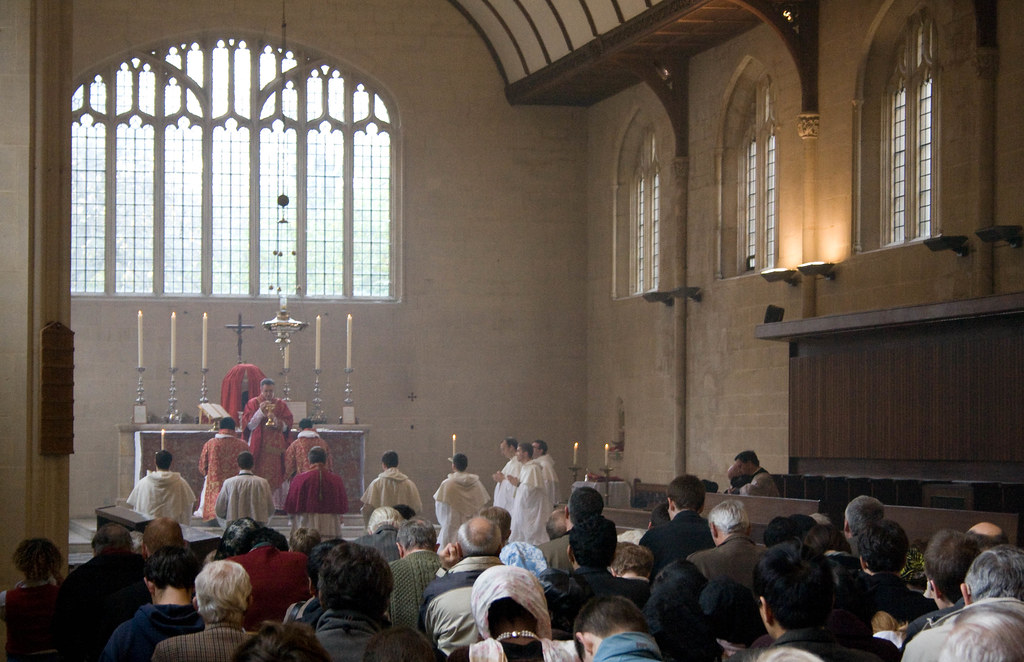
They are wonderful occasions. Please support them!

LMS Pilgrimage Schedule for 2010
May
Sat 15 Pilgrimage to Our Lady of Consolation Park Lane West Grinstead
Details to be confirmed. Contact Peter Cullinane on 02392471324 (Shrine - picture)
Sun 23 Welsh National Pilgrimage to Shrine of Our Lady of the Taper,
Our Lady of the Taper, North Road, Cardigan.
Tbc 2.30pm Holy Hour, Benediction and Mass
Details: Steffano Mazzeo on 01597 840634 (Shrine - second picture)
June
Sat 26 LMS Annual Mass, Pontifical Mass Westminster Cathedral 2pm.
Celebrant: Bishop Alan Hopes (AGM in the morning)
July
Sun 4 National Pilgrimage to Holywell
St Winefride’s, Well Street, Holywell. Mass at 2.30pm followed by Procession to
St Winefride’s Well Devotions and Veneration of the relic and Benediction
Details: Steffano Mazzeo on 01597 840634
or Simone Sunderland on 01686627909 (Shrine - picture)
Sun 24 Pilgrimage in honour of SS John Lloyd & Philip Evans
St Peter’s, St Peter St, Roath, Cardiff. Sung Mass and Procession 3.00pm
To be confirmed. Contact Andrew Butcher on 07910930788
September
Sat 4 Pilgrimage to Brinkburn Priory
Brinkburn Priory, Nr Rothbury, Northumberland. Mass 12 noon
To be confirmed. Contact David O’Neill on 0191 2645771 (Priory)
Sat 4 Pilgrimage to Glastonbury
Church of Our Lady, Magdalene St, Glastonbury. Mass at 12 noon
Benediction 2.15pm followed by Rosary Procession
To be confirmed. Contact Nigel Taylor on 0117966 9976 (Abbey)

Sat 11 LMS National Pilgrimage to Walsingham
Rosary Procession from Friday Market 2.00pm Sung Mass 3.30pm
Details: LMS office on 020 7404 7284 (Catholic Shrine - picture)
October
Sat 16 St Richard Gwyn Pilgrimage Wrexham
To be confirmed. Contact Steffano Mazzeo on 01597 840634
or Simone Sunderland on 01686627909
Sat 23 Oxford Martyrs Pilgrimage.
Solemn Mass in Blackfriars and procession
Details: Joe Shaw on 01993 812874 (Report - picture)
November
Sat 6 LMS Annual Requiem, Pontifical Mass Westminster Cathedral 2pm
Celebrant: Bishop John Arnold (Meeting of LMS Representatives in the morning)
Sat 6 LMS Annual Requiem, Pontifical Mass Westminster Cathedral 2pm
Celebrant: Bishop John Arnold (Meeting of LMS Representatives in the morning)
Subscribe to:
Posts (Atom)