Labels
- Bishops
- Chant
- Children
- Clerical abuse
- Conservative critics of the EF
- Correctio Filialis
- FIUV Position Papers
- Fashion
- Freemasonry
- Historical and Liturgical Issues
- Islam
- Liberal critics of the EF
- Marriage & Divorce
- Masculinity
- New Age
- Patriarchy
- Pilgrimages
- Pope Francis
- Pro-Life
- Reform of the Reform
- Young people
Tuesday, July 20, 2021
Marian Franciscan Vocations retreat, August
Monday, July 19, 2021
Who is Pope Francis punishing?
Pope Francis writes, in the letter, that the use of the 1962 Missal is
often characterized by a rejection not only of the liturgical reform, but of the Vatican Council II itself, claiming, with unfounded and unsustainable assertions, that it betrayed the Tradition and the “true Church”.
Pope Francis indicates that this concern, and the desire for measures such as those he has adopted, has been expressed by bishops responding to the survey on the implementation of Summorum Pontificum which the Congregation for Divine Worship carried out in 2020. This is very surprising, since those who had sight of the results consistently reported that a great many bishops were positive about the place of the Old Mass in their diocese. Even the French bishops, whose rather negative collective response was leaked, had to acknowledge many positive aspects of the phenomenon, and concludes that “if it [Summorum Pontificum] honors a principle of reality, then a tireless work of unity is always necessary.” What the French bishops had in mind, to assist this “work of unity,” was things like reconciling the calendar and lectionary, issues which Pope Francis has not broached.
Read the whole things there.
Friday, July 16, 2021
Some Comments on the Apostolic Letter Traditionis Custodes
This has already gone out by email to LMS supporters.
This document will be a grave disappointment to those many priests and lay Catholics who responded to the words of Pope St John Paul II and Pope Benedict XVI, who encouraged the use of the earlier liturgical tradition, calling it a ‘rightful aspiration’ and ‘riches’ for the Church, respectively. These Catholics have worked hard over many years, particularly since 2007, to build up the unity of the Church, which as the Second Vatican Council declared does not depend on liturgical uniformity but on unity of faith under the Pope (Sacrosanctum Concilium 37; Orientalium Ecclesiarum 2).
The provision that the EF not be celebrated in parish churches appears entirely unworkable, in the context of the careful provision which has been made over many years by bishops all over the world.
The overall negative judgement of the EF and the communities which attend it seems wholly unwarranted, and we would challenge any apologist for this document to produce real evidence that the EF has undermined the unity of the Church, compared, say, to the celebration of Eastern Rites in the West, the special liturgical celebrations of the Neocatechumenate, or the great variety of liturgical styles found in the context of the Ordinary Form of the Roman Rite.
In detail, looking at the provisions of the document:
Art 1: This appears to overturn Pope Benedict XVI’s claim that the Roman Rite can be considered as having two ‘Forms’, Ordinary and Extraordinary. The document adopts the terminology of ‘the 1962 Missal’.
Art 2: This rolls back the presumption of authorisation for the 1962 Missal which was created by Summorum Pontificum in 2007. However, that claim was based on the fact that the older Missal had never been abrogated. Since this document does not formally abrogate it, this creates a legal anomaly.
Thursday, July 15, 2021
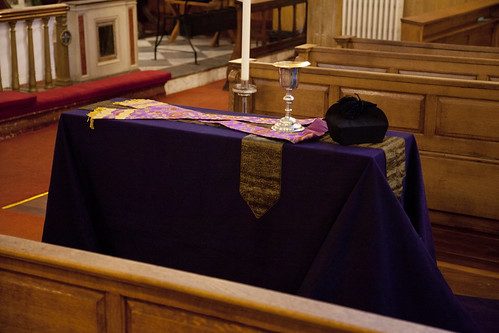
Requiem for Fr Anthony Conlon
![]() |
| As a priest, the catafalque (coffin stand with pall, representing the body) has a chalice and paten, and biretta, on it. |
Wednesday, July 07, 2021
Concelebration: a new front in the liturgy wars?
![]() |
| Individual Masses at the LMS Priest Training Conference in Prior Park a few years ago. |
The celebration of priests together, when two or more priests celebrate one Mass, has long caused controversy. For decades after the Second Vatican Council priests have felt under pressure to take part in “concelebrated” Masses instead of celebrating their own Mass, perhaps without a congregation. Concelebration is now being enforced in St Peter’s Basilica in Rome, ending the long tradition of large numbers of priests celebrating individually at side altars. Now concelebration is being used as a weapon against priests who celebrate the Traditional Latin Mass: the Archbishop of Dijon, Roland Minerath, is ending the 23-year-old apostolate of the Fraternity of St Peter in the Archdiocese because the priests serving it prefer not to concelebrate.
Many bishops, religious superiors and seminary rectors like concelebration, as it gives them effective power over the celebration of Mass by their priest subordinates. They can insist that these priests not only attend a “conventual” or “community” Mass when priests are gathered together, but do so in a way which prevents them from celebrating a Mass of their own. When there is a large number of priests, most of them have hardly anything to do in concelebration, and of course they have no control over it: they can’t celebrate it at an earlier or later time, in a chapel with special significance to them, or using liturgical options of their choice, such as a votive Mass. Concelebration is a control-freak’s dream.
Tuesday, July 06, 2021
Who is afraid of the Traditional Mass?
On Sunday July 3, the FIUV — the International Una Voce Federation — took out an advert in the Rome edition of the Italian newspaper La Repubblica, to make a statement about the Traditional Latin Mass. It points out:
“The growth of interest in the traditional liturgy is not due to nostalgia for a time we do not remember, or a desire for rigidity: it is rather a matter of opening ourselves to the value of something that for most of us is new, and inspires hope.”
That it is controversial to be attached to the liturgy used by the Church for more than a dozen centuries is the sign of a deep malaise in the Church. Two prominent prelates in the Roman Curia have recently been reported making remarks about the Extraordinary Form (EF) of extraordinary hostility, and these have come after weeks of speculation about a new official document which will in some way roll back the freedom which Pope Benedict XVI gave to the more ancient liturgy in 2007.Possibly all these stories and rumors are false or taken out of context — the Vatican can seem like a hall of mirrors sometimes — but the mere fact that these stories are circulating is a reminder that the Old Mass has determined enemies in Rome.
Read it all there.
Support the Latin Mass Society
Sunday, July 04, 2021
Statement from the FIUV
The Una Voce Federation has taken out an advert in the mass-circulation Italian daily newspaper La Repubblica, appearing today Sunday 4th July.
The English text is as following (for other languages see here):