Tuesday, December 21, 2021

Keep calm and find out where go to Traditional Mass

IMG_0202
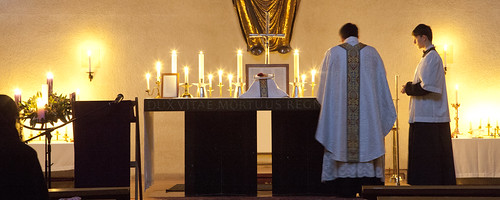
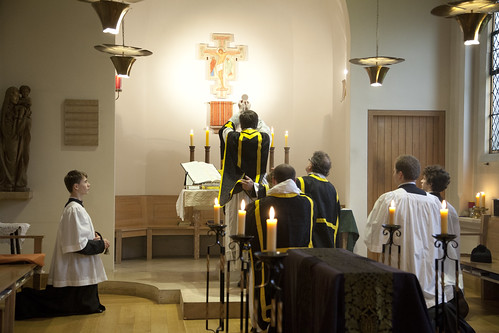
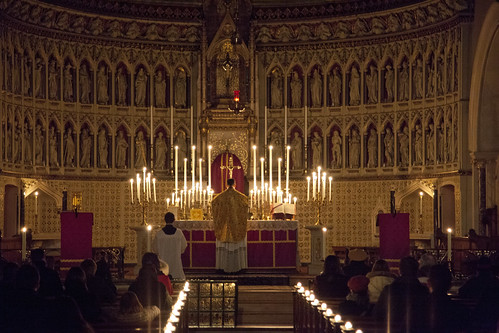
Rorate Mass at Holy Rood, Abingdon Road, Oxford, last Saturday
(with a very slow shutter speed!)

I am preparing comments and canonical guidance on the subject of the Responsa ad dubia.

In the meantime, if parishes will not be allowed to publish the times of Traditional Masses in their bulletins, as the Responsa suggest, the long-standing service of the Latin Mass Society in publishing Mass listings is going to be more important than ever. Get instant updates from our new Telegram channel: click here:


And while you are about it, why not join the Latin Mass Society?

IMG_0204

Monday, December 20, 2021

A small difficulty with the Responsa ad dubia

IMG_0133
Rorate Mass at the Oxford Oratory, England

Update: it has been pointed out to me that the Rite of the Communion of the Faithful is described (not quite the same as being set out for liturgical use) in the front matter of the 1962 Missal, in a section called Ritus Servandus, X 6. It is not in the main text of the Missal. Also found between the Missal's covers, as a matter of fact, is the Rite of Confirmation: in Appendix II. This is set out for liturgical use.

------------------------------

Cross-posted from Rorate Caeli.

No doubt more and better analyses will be published about yesterday's Responsa from the Congregation for Divine Worship, but working through its implications I was struck but something others may not notice, which can serve to illustrate some features of the document as a whole.

All the Church’s legislation needs to be understood in light of common sense, of previous legislation with greater authority, and of the Church’s the fundamental theological and moral principles. These principles of are of particular importance when we consider legislation which appears, on the one hand, to be hastily composed, and on the other, to have far-reaching, and perhaps unforeseen, consequences.

Tuesday, December 14, 2021

Rorate Mass at the Oxford Oratory

IMG_0133

It was celebrated by Fr Benedict Manning of the Oratory.

IMG_0135

Tuesday, December 07, 2021

'Ministers of Christ' by Peter Kwasniewski

See the book on Amazon UK here; Amazon USA here


When this project was first conceived over a year ago, my initial idea was to write a critique of Paul VI’s attempted suppression of the subdiaconate and minor orders, of John Paul II’s permission of altar girls, and of Francis’s innovation of female “acolytes” and “lectors.” During its writing, however, the scope of the book considerably broadened to include a full-scale presentation and defense of the traditional sevenfold manifestation of Orders — priest, deacon, subdeacon, lector, acolyte, exorcist, and porter — together with an explanation of the distinct but mutually supporting roles of clergy and laity. In order to accomplish this, I stepped back further to look at the distinction and complementarity of the sexes in the order of creation and the order of redemption, a perspective that provides the ultimate foundation for the Church’s entire teaching on states of life, roles, and ministries. In this way the book serves as a response to the “gender madness” that has afflicted the world and has increasingly infected the Church. ...

Ministers of Christ analyzes the problems with recent popes’ successive innovations in the area of ministry, showing how they have created a theologically and liturgically incoherent situation—a categorical rupture from a tradition firmly rooted in the most profound anthropological, Christological, and ecclesiological principles. In this regard the Church stands in desperate need of the correct (and corrective) witness of the usus antiquior.

Support the Latin Mass Society

Friday, December 03, 2021

Pilgrimage to Lyford Grange

2362ab18-248e-49ab-8a98-53b2c0af9afd

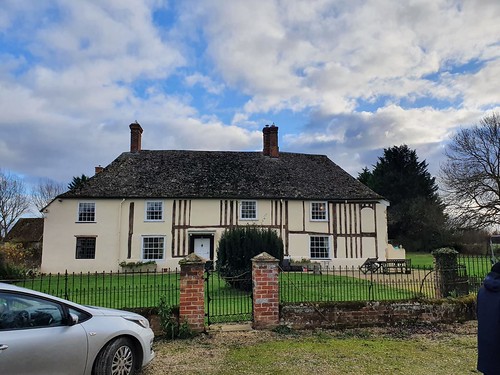
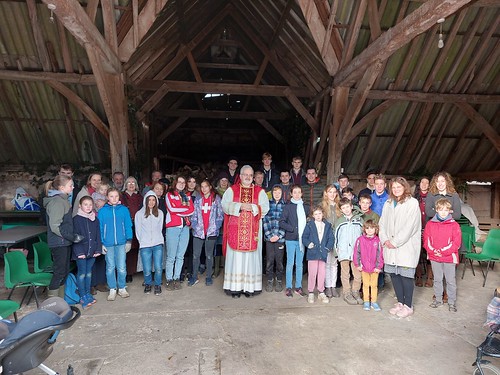
Lyford Grange is the Recusant Catholic house where St Edmund Campion was captured in 1581. Traditional Low Mass was celebrated in a barn next to the house by Fr Richard Aladics of the Leeds Diocese. The pilgrimage was organised by Declan Jones.

ae1f336e-f702-4152-870d-9d79fe12cdd0

1749945b-d84b-4f79-a6ff-f9bc7ad9186d 

Support the Latin Mass Society

Thursday, December 02, 2021

Annual Requiem in St Benet's Hall

IMG_0092

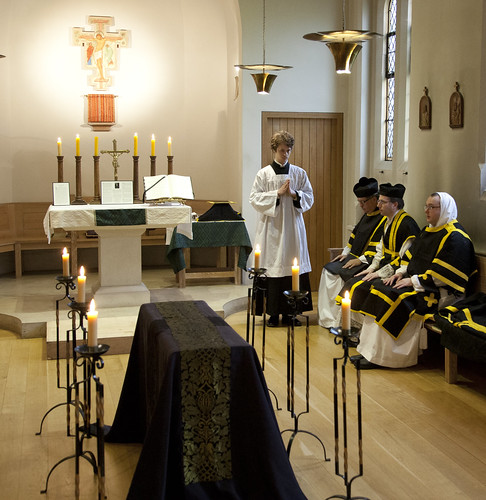
It is my pleasant duty to organise a Requiem each year for the deceased members, benefactors, and staff for my home institution within the University of Oxford, the Benedictine foundation, St Benet's Hall. It was particularly good to attend it this year, as it did not take place in 2020 due to the Covid epidemic.

IMG_0094

Wednesday, December 01, 2021

An anti-Christian cultural hegemony

IMG_0100
Mass last Saturday: annual Requiem in St Benet's Hall, Oxford.

My latest on Voice of the Family

If one is to live a Christian life, let alone evangelise in some small way, one has to recognise the unique challenges of one’s time and place. At all times and in all places there is the reality of Original Sin, one’s own sin and the sin of others. For the last century or so, we in the West have also had to live with the fact that being any kind of Christian, and perhaps particularly being Catholic, is regarded by most people as either incomprehensible or malign. In the words of Hilary Mantel, the much-lionised, best-selling author of historical fiction, which twists the narrative to demonise St Thomas More, being a Catholic is not “respectable”.

Mantel, like the author Philip Pullman, seems to have “issues”, as the modern jargon has it, with Catholic faith and culture. She has no intrinsic significance — there have always been strange people around — what is important is the use which has been made of her: she has been awarded all kinds of prizes and her repulsive novels have been adapted for the Royal Shakespeare Company. Pullman, another winner of multiple awards, has had one book made into a film and another into a play. Both writers have received the accolade of special editions of their works done for the bibliophiles of the Folio Society.

The publicity machines have nevertheless found it difficult to explain these peculiar individuals. Mantel was initially praised for the historical accuracy and realism of her work but, as real historians began to notice her material, she hastily rebranded it as a very fictional kind of historical fiction. After pocketing prizes for children’s books, Pullman decided, as his graphic descriptions of child torture began to get a bit out of hand, that this was just a misunderstanding; no, he was writing for adults.

Such U-turns would have sunk lesser folk, but the secularist establishment needs Mantel and Pullman. They possess some literary skill and their work can be used to counter-balance and even to exclude the Christian narratives given to us by writers of a previous generation: notably, Robert Bolt’s play and film, A Man for All Seasons, about St Thomas More, and the children’s books of C.S. Lewis. Literature and historical memory is being remade in the snarling image of secular modernity.

Read the whole thing there.

Support the Latin Mass Society