 |
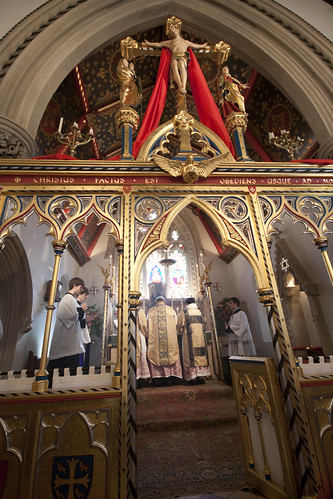
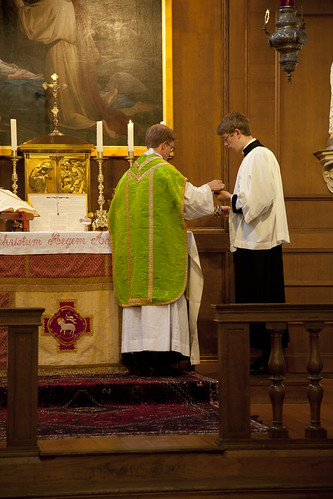
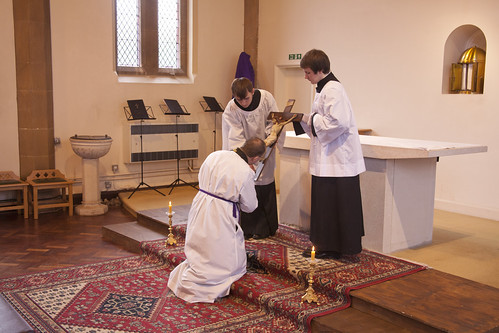
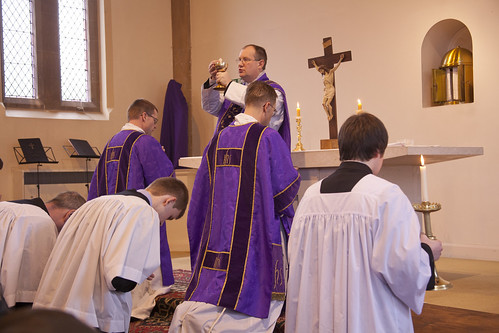
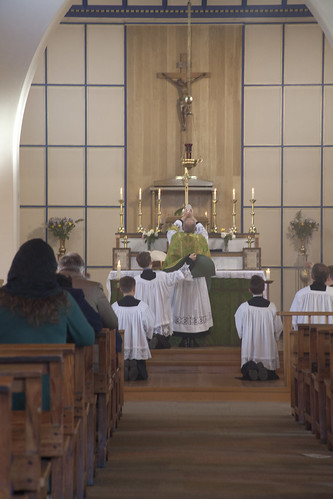
The Traditional Latin Mass behind a Rood Screen, at St Birinus,
Dorchester on Thames. |
Like some of my earlier posts about obscure (or deliberately obscured) documents from Rome, this comes into the category of what we might call 'What Does the Church Really Say?' The documents I have looked at vary in authority but they are part of the Ordinary Magisterium, they establish a cumulative case against a lot of liberal assumptions. In this short series I am going to look at a couple of very interesting documents produced by the Congregation for the Oriental Churches. First, in this post, a little background.
The Oriental Catholic Churches, the ones in communion with the Pope, have endured a sad history of 'Latinisation': the adoption of the liturgical and other practices of the Latin Church, which has flattened the rich diversity of the Universal Church and cut them off from the traditions still kept, in most cases, by Eastern Churches not in communion with Rome. Indeed, from the point of view of the latter this process was and remains a scandal and an impediment to reunion: if this is what happens when you accept Rome, they reasoned, then we don't want to have anything to do with it! However, the great Pope Leo XIII initiated a very clear policy of encouraging Eastern Catholics to preserve and restore their traditions in their integrity, and this was powerfully reaffirmed at the Second Vatican Council. It was easier said than done, unfortunately, since the leaders of these Churches were usually educated in Rome and were often eager to be as like their Latin friends as possible, even without any of the official encouragement of Latinisation which was in evidence in the 17th and 18th centuries. Nevertheless, important progress was made.
In the meantime, of course, we had the liturgical reform of the West. Out goes (nearly all) silent prayer by the priest. Out goes worship
ad orientem. Out goes the use of the West's ancient liturgical language. Out goes (a lot of)
proskynesis, which in the West usually takes the form of kneeling and genuflections. Out goes the mystery, the awe, the timelessness and otherworldliness of the liturgy, and liturgical texts which anticipate the consecration (referring to the unconsecrated Host as 'this spotless Victim' in the Offertory). Out goes (a lot of) the sense of the sinfulness of the priest. Out goes the sharp distinction between Sanctuary and Nave, marked in modern times in the West by steps and rails. In comes a lot of new things like lay people distributing the Blessed Sacrament, secular musical styles, and so on.
None of these things were, in fact, called for by the Second Vatican Council, with the partial exception of the use of the vernacular, but they happened, they were officially promulgated or, at least, permitted, and the theological rationales for them gained currency even if they were never explicitly endorsed by the Magisterium.
Thus, Bugnini and his friends said that the pre-Conciliar Latin liturgy was illogical, that the stuff about sinfulness was 'negative' and unpastoral, that Latin, silence, and worship
ad orientem excluded the Faithful and made them 'dumb spectators' at Mass, and that its historical development was a matter of 'accretions' which obscured the true, pastoral, and logical shape of the primitive liturgy.
If this is true, then it is true in the East as well as the West: you don't cross some invisible line in the Balkans and suddenly find that human nature, logic, and the principles of historical development flip upside-down.
The leaders of the Oriental Catholic Churches, accordingly, could hardly look at these arguments without seeing a systematic attack not only on the traditions of the West, but on the traditions of the East. Insofar as they wanted to be up with the latest trends, it was natural that they should seek to implement a version of the reform in their own churches, in direct opposition to the official policy of eastern traditionalism.
Taking the policy of Eastern Traditionalism with the
de facto endorsement of Bugnini's attack on Western traditionalism, it would appear that in the West, the ancient Mass is obscurantist; in the East, though, where the liturgy exhibits many of the same traits in a far more extreme way, this is all wonderful, mysterious, and (in the words of Bl Pope John Paul II's Apostolic Letter
Orientale Lumen), speaks to the human person in his totality, and not just the intellect:
tota sua cum persona (
Orientale lumen (1995) 11). Again (section
8):
Today we often feel ourselves prisoners of the present. It is as though man had lost his perception of belonging to a history which precedes and follows him. This effort to situate oneself between the past and the future, with a grateful heart for the benefits received and for those expected, is offered by the Eastern Churches in particular, with a clear-cut sense of continuity which takes the name of Tradition and of eschatological expectation.
Non-Catholic Easterners, of course, may well wonder how sincere all this respect for tradition is given the way the Latins treat their own traditions. Indeed, I would forgive them for thinking we are completely schizophrenic on the subject. It is not surprising that they welcomed Pope Benedict's
Summorum Pontificum, since it suggests that the Latins might begin to walk the walk and not just talk the talk about preserving liturgical tradition. The late Patriarch of Moscow's reaction was
recorded by Zenit:
‘
Benedict XVI’s move to allow for wider celebration of the Roman Missal of 1962 has received a positive reaction from the Orthodox Patriarch Alexy II of Moscow. “The recovery and valuing of the ancient liturgical tradition is a fact that we greet positively,” Alexy II told the Italian daily Il Giornale. Benedict XVI's apostolic letter Summorum Pontificum, published in July, explains new norms allowing for the use of the 1962 missal as an extraordinary form of the liturgical celebration. “We hold very strongly to tradition,” he continued. “Without the faithful guardianship of liturgical tradition, the Russian Orthodox Church would not have been able to resist the period of persecution.”
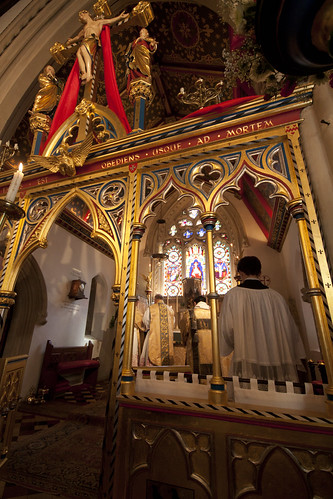
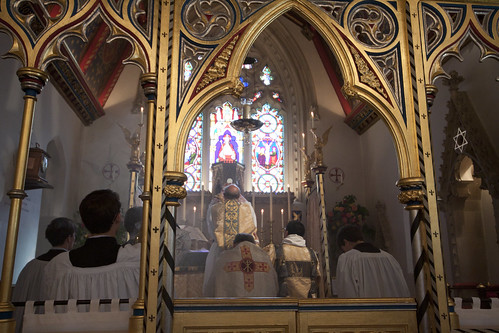
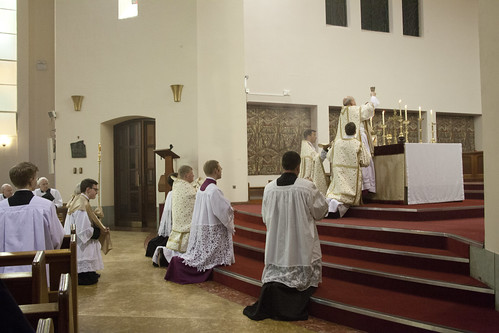
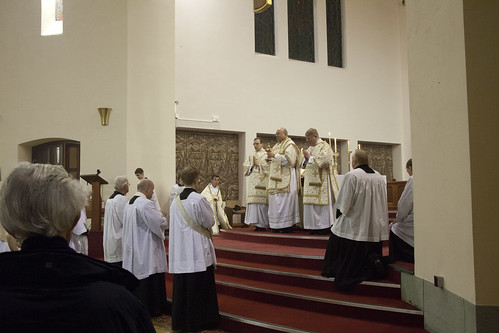
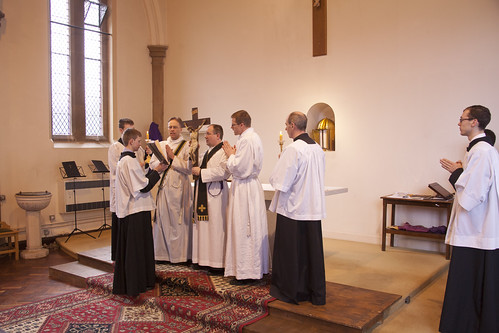
The Western Rood Screen served, as can be seen in the photos in the post, more to frame the action of the Mass than to prevent people seeing what was going on. It nevertheless places the importance of the symbolic separation of the Sanctuary, representing Heaven, from the Nave, representing Earth, ahead of considerations about sight-lines and feelings of 'inclusion'. The solid Eastern Iconostasis (Icon screen) takes this idea much further. Rood Screens were often destroyed by 18th century western liturgists inspired by very similar ideas to those of Bugnini and his followers, and a new wave of hostility to them manifested itself after the Council. But if we can't tolerate Rood Screens, what can we make of the Iconostasis?
The answer is that we need to distinguish that
de facto but not
de jure endorsement of the attack on Western traditions, from what the Church actually
teaches about tradition.
In the next posts I will discuss two documents of the Congregation for the Oriental Churches which discuss the principles of liturgical reform, with this in mind.






 Via Ezio 28, 00192 Roma.
