Monday, January 22, 2024

Chairman's Briefing: the African Bishops and the Vatican

Another of my 'briefings' to supporters of the Latin Mass Society.

It begins:

Cardinal Abongo
In the last Briefing I introduced Fiducia supplicans and initial reactions to it. These reactions have continued to come in, and many of them are less than welcoming. Indeed, only a small number of Bishops’ Conferences have made statements expressing any pleasure about the document being published. Most official reactions have been very guarded, and some, while diplomatic, clearly regard the document as ill-judged. Many of the strongest negative reactions have come from African Bishops’ Conferences.

You can see my latest 'briefing' here.

Sign up to receive them by email here, along with our monthly newsletter.

Support the Latin Mass Society

Saturday, January 13, 2024

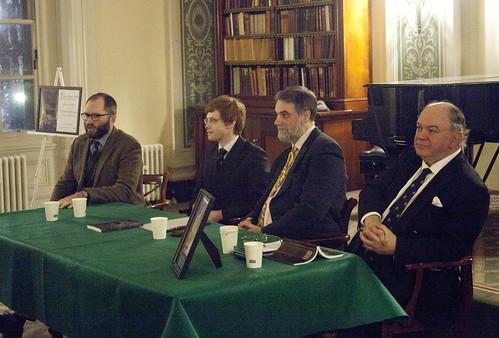
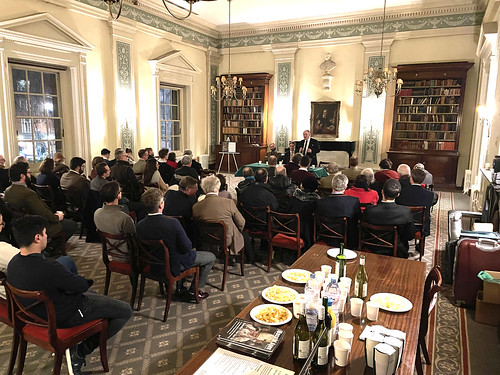
Book launch for 'A Defence of the Monarchy'

IMG_9894

Short podcasts from contributors' presentations forthcoming.

Coincidentally, Gavin Ashenden has published Part I of a conversation we had on the subject: find it on your podcast provider (Gavin Ashenden: 'Merely Catholic') or listen to it here.

IMG_9879 

IMG_4103 

Support the Latin Mass Society

Thursday, January 11, 2024

Blessings for Irregular couples: a conversation with Fr McTeigue


Fr McTeigue has a Catholic radio programme -- you can listen to episodes as podcasts, as well as live -- and I've talked to him before more than once. Last evening we discussed Fiducia supplicans.

I enjoy these conversations. Fr McTeigue is well-informed and always displays admirable common sense.

Support the Latin Mass Society

Wednesday, January 10, 2024

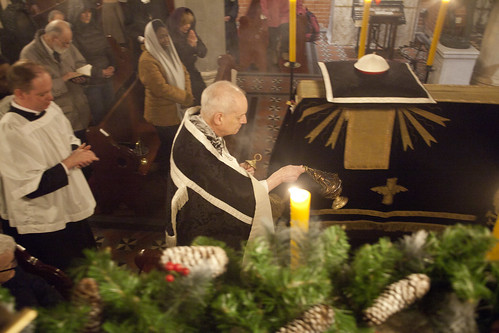
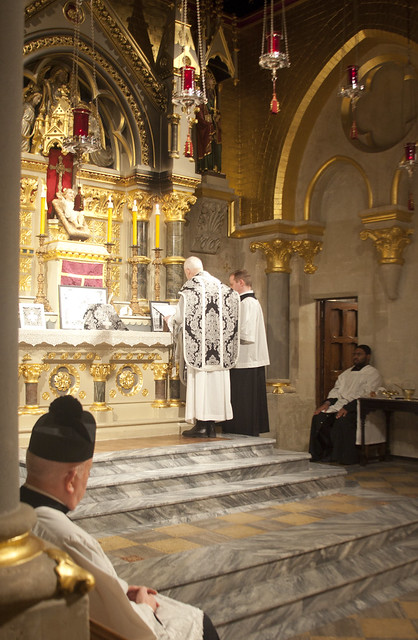
Anniversary Requiem for Pope Benedict XVI: photos

IMG_9872

This took place on Monday 8th January in Corpus Christi Maiden Lane. Sung Mass was accompanied by the Southwell Consort who sang Palestrina's Missa pro Defunctis. The celebrant was Fr John Scott. It was well attended and the music was wonderful--as usual, the Consort fielded a huge number of singers, both amateur and professional, with a professional conductor.

May Joseph Ratzinger, Pope Benedict XVI, rest in peace.

IMG_9832

Tuesday, January 09, 2024

Artistic modernists rally for the Traditional Mass: in the Catholic Herald

My latest for the Catholic Herald, on my book on the petitions to save the Traditional Mass: The Latin Mass and the Intellectuals.

Strange bedfellows: Unlikely figures who rallied around the Traditional Latin Mass in the 60s and 70s

When the post-Vatican II liturgical reform was getting underway in 1966, and again when the reformed Mass had been unveiled in 1971, petitions signed by intellectuals and cultural figures – poets, writers, artists, musicians – called for the preservation of the older liturgy, alongside the new. These voices were heard by Pope Paul VI, who tried to insist on the preservation of the sung Latin Office in Sacrificium laudis in 1966, and granted England and Wales permission for continuing celebrations of the older Mass in 1971. This was extended to the whole world by Pope John Paul II in 1984.

It is not surprising to find among the 1966 petitioners the reactionary convert novelist Evelyn Waugh, or the 1971 petitioner Agatha Christie, with her appreciation for the reassuring and nostalgic alongside the sinister and murderous. It is more surprising to find the non-Catholic, homosexual artistic modernists Benjamin Britten and WH Auden, both signatories in 1966. Auden, who by then had returned to the High Anglicanism of his upbringing, went on to criticise Anglican liturgical reform in the strongest terms. Before his death, TS Eliot also turned out to have archly traditional opinions on Anglican worship.

Sunday, December 31, 2023

Artistic modernism and the Traditional Mass

My latest for the European Conservative: some reflections arising out of the work I did for The Intellectuals and the Latin Mass, about the intellectual and artistic signatories of petitions to save the Traditional Latin Mass.

A key passage:

This is a reminder that the relationship between artistic modernism and traditional artistic forms is a complex one. By definition, modernism involves a rejection of artistic conventions, but there is an open question as to which conventions are being overturned. The impulse of modernism is a response to modernity—new technology, social change, and so on—but there is again an open question regarding what form this response will take.

Those brought up in a strongly-manifested Catholic culture may feel that modernity is a challenge that requires the Church to change in order to address it, or they may feel even that modernity has proved the Church wrong. Artistic modernism may be an expression of this stance: James Joyce is the outstanding artistic example of such a view.

Other artists, no less rebellious, took things in a very different direction. Those whose lives have been dominated by a secularised culture, characterised by mass-produced art, may also take the view that their own culture is inadequate to the demands of the time: demands made, in particular, by the wars, political crises, and economic convulsions of the modern age. It is equally clear, however, that this culture is itself the product of modernity: in other words, modernity has created a culture which does not equip people to deal with modernity. To rebel against it, and to seek out less inadequate cultural forms, may involve the overthrow of the modern in the interest of reviving something older.


Support the Latin Mass Society

Saturday, December 30, 2023

Non-Catholics supporting the Traditional Mass

My latest on 1Peter5. It begins:

Last month I launched a new book, The Latin Mass and the Intellectuals: Petitions to Save the Ancient Mass from 1966 to 2007. Many, if by no means all, readers will have heard of the “Agatha Christie Petition” which was presented to Pope Paul VI in 1971, stimulating him to given the first “indult” in favour of the Traditional Mass, for England and Wales. The story is much more complex and interesting than this, however.

For many years the main public source of information about the petitions was a 1999 article by Alfred Marnau, that had appeared in the Latin Mass Society’s Newsletter and was subsequently made available online. English-language references to the 1971 petition since then, up until now, have invariably used this as their sole source. It hasn’t helped that the UK Catholic press at the time of the petition and indult observed a substantial, if now quite complete, news blackout about them. The Latin Mass Society had to feed the news to The Times newspaper in order to get it into the public domain at all, and the text of the Indult was not made available to them by Cardinal Heenan for many months. Readers may remember the inability of the archivists at the Dicastery for Divine Worship to find the indult (we sent Cardinal Roche a copy).

Alfred Marnau was a hero of the early movement; after the petition he became the Chairman of the Latin Mass Society, and later founded Pro Ecclesiae et Pontifice to campaign on orthodox doctrine and Catholic education. However, in 1999 he was dying, and his article gives a rather incomplete picture of the petition, its organisation, and its wider context. He doesn’t claim to have written the text, for example, but does not explain that the original was in Italian, and that in addition to the

57 names
that were published in The Times on 9th July 1971 there were another 48, non-UK based petitioners, whose names later appeared in Italian and French publications. The whole list of 105 was finally published in Una Voce Italia in their newsletter, that December.

Read the whole thing there.