Thursday, November 29, 2018

Don't do your online Christmas shopping till you've read this

It came as a surprise to me, and may be to you too, that you can support your favourite charity when shopping online in a very simple way without any cost to you.

There are two ways of doing this; they are explained in the latest edition of Mass of Ages. In case you've not got your copy (no?), here a summary.

One is called 'easyfundraising'. If you visit your usual online retailers through the easyfundraising site, or using the easyfundraising app, having told easyfundraising which charity you wish to support, a great many of them will make a small donation to your charity if you buy something.

Just visit the easyfundraising site and all will be explained. The donations vary in size; some are fixed sums, some are percentages. It's not much but it adds up. If thousands of UK Catholics consistently did their shopping this way in favour of the Latin Mass Society or Aid to the Church in Need, it would raise a very real sum of money.

Wednesday, November 28, 2018

Explaining and defeating Political Correctness' spiral of lunacy

My latest on LifeSite News. A key passage:

One might expect a movement to correct injustices to enjoy the most support when addressing the worst injustices, and falling levels of support as the injustices in view are less and less indisputable. While a movement will gain credibility and momentum by early successes, increasingly extreme demands will, usually, harden opposition to it, and put potential supporters off. For this reason, many successful political movements never quite complete their agendas: they eventually run out of steam.
This has not happened with PC. Demands routinely made today would shock even the most avid supporter 10 years ago. Implications of PC causes which are ridiculed as scare-mongering one year are then embraced the next: an example would be the promotion of polygamy following the legal enforcement of same-sex “marriage.” (2015: Oh no, it won’t happen; 2017: Oh yes, it just has.)
As Kristian Niemietz of the UK think-tank the Institute of Economic Affairs explains, the key to understanding the movement is the elevated moral status enjoyed by those who embrace it. Being PC or progressive is not about having a reasonable disagreement with university colleagues or fellow citizens: it is about being free from the ancient prejudices to which they are subject. It is about being more enlightened, more advanced, and more virtuous.

Read it all here.

Support the Latin Mass Society

Sunday, November 25, 2018

Clericalism and abuse

My latest on LifeSite News.

A key passage:

The erasing of the distinction between clergy and laity does not remove the danger of the abuse of power. Priests who see themselves, or are seen by the laity, primarily as managers, and perhaps as more-or-less interchangeable with their lay assistants, rather than as men consecrated to a special sacramental role, can very easily abuse the power which their managerial status gives them. 
Even more dangerous is the substitution of personal charisma for formal clerical prerogatives, as the basis of a priest’s role in the community. It is clear enough where the role of the ordained priesthood begins and ends, what he has authority over and what he does not, what obligations he has and to whom he is responsible. A charismatic leader is not bound by any of this, and the devotion of his followers very easily opens up opportunities for abuse of all kinds. 
Read it all there.

Support the Latin Mass Society

Friday, November 23, 2018

Catholic Bishops are afraid of investigations

My latest on LifeSite News.

A taster:

In some cases, decision-makers were personally involved in wrongdoing. In other cases, it is sometimes suggested, they were being black-mailed, explicitly or implicitly. I would suggest, however, that this is another motive, which would apply even to those who had little to fear personally: simply that a real house-cleaning exercise would implicate so many people, in such seriously bad things, that the overall effect on the Church’s standing, and even its ability to function, would be catastrophic.


Read it all here.

Support the Latin Mass Society

Tuesday, November 20, 2018

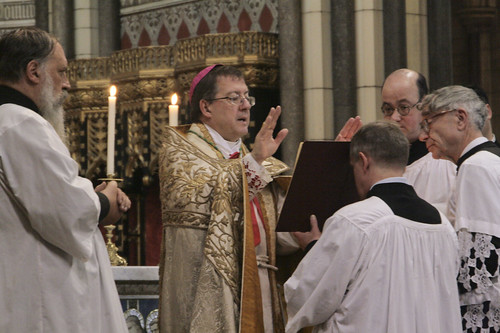
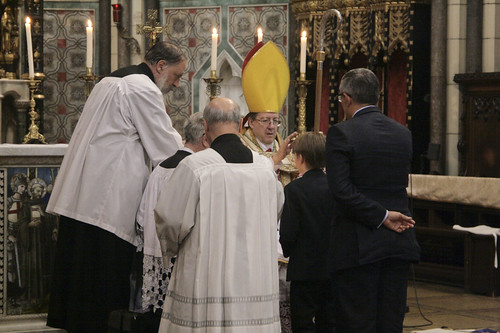
LMS Confirmations 2018: Photos

IMG_2802

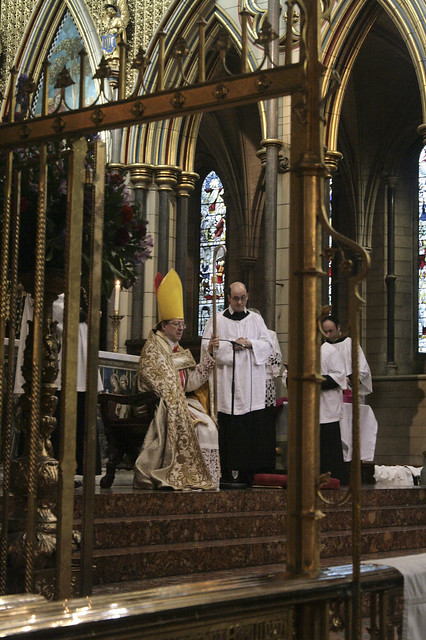
Every year the Latin Mass Society organises confirmations in the Extraordinary Form in St James', Spanish Place, in London. They are usually conferred by an auxiliary bishop of the Archdiocese of Westminster. This year, for the third time, it was Bishop John Sherrington.


IMG_2808

Each candidate is annointed, given the sacramental formula, and then the ritual blow on the cheek. Bishop Sherington spoke movingly about the symbolism of this blow, as showing that the confirmand must be willing to die for the Faith.

IMG_2811

Sunday, November 18, 2018

A Catholic culture? We need a culture

Me on LifeSite News. A key passage.

Up to the first half of the 20th century, western societies taught their children stories which illustrated and reinforced a particular conception of marriage and family; the same conception was supported by the civil law, by social expectations and social sanctions; and the same model was experienced by the vast majority of people. The same is true of the conception of the role of the state, the place of religion in society, gender roles, and a thousand other things. These shared understandings, which took on distinct flavors in different countries and in different cultural and ethnic groups, were the basis of a sense of solidarity.
One does not have to imagine that the culture of any particular time and place was perfect in every way, in order to realize that a society which lacks a culture in this sense is in serious trouble. But that is our situation today. The old models of how to live have not entirely gone away, but they are no longer supported by a social consensus. Our children are continually exposed to mixed messages, and civil law and social norms not only fail to support the old model, but in many ways work to undermine it. On the other hand, that model has not been replaced by a consistently applied, widely understood, and coherent, alternative.
Read it all there.

Support the Latin Mass Society

Should Catholics be free-speech absolutists?

Me on LifeSite News: a key section.

Since people on the “progressive” side of the debate generally need not fear exclusion from social media and public spaces, they usually do not need to make such appeals, so this appeal to free speech is becoming increasingly associated only with the defense of conservative voices. We now hear from liberals that the principle of free speech is being “weaponized,” a rhetorical preparation for saying that the principle should be rejected, as the latest Google memo comes close to doing.

This is quite a turn-around from the depiction of the Catholic Church as the opponent of liberty, and the historic attempts to undermine the Church’s institutions and influence by scurrilous pamphleteering: characteristic tactics of the Church’s opponents since the time of Luther. In response to this kind of activity, Popes down the ages remind us that freedom of expression is not an absolute right. Typical was Pope Pius IX, who had the Papal States to administer as well as the Universal Church, and who wrote in 1864 (Quanta cura) of “that erroneous opinion”

that a right resides in the citizens to an absolute liberty, which should be restrained by no authority whether ecclesiastical or civil, whereby they may be able openly and publicly to manifest and declare any of their ideas whatever, either by word of mouth, by the press, or in any other way.
Read it all there.

Support the Latin Mass Society