Friday, March 09, 2018

Do we want to solve the problem of sacrilegious Communions?

IMG_1209
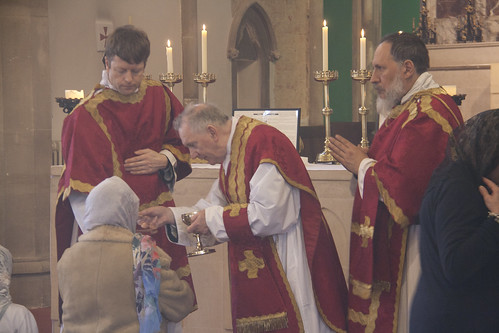
Holy Communion at a High Mass in the Domincan Rite at Oxford's Blackfriars
Sometimes people like to complain about problems but do not, really, want to solve them. If you offer a solution, they are uninterested, or even angry. The problem is important to them. It may even be a way for them to get something they want: perhaps to extract a concession from someone. So I ask: does anyone (anyone in authority) actually want to solve the problem of sacrilegious communions?

Pope John Paul II pointed out the problem way back in 1980 (Dominicae Cenae):
Sometimes, indeed quite frequently, everybody participating in the eucharistic assembly goes to Communion; and on some such occasions, as experienced pastors confirm, there has not been due care to approach the sacrament of Penance so as to purify one’s conscience.

The situation is now vastly worse than in 1980. Many go without real reflection. Others, who might be thinking about how they ought to go to Confession first, find it embarrassing or even physically awkward to avoid going up too. It has become a common attitude that if you don't go to Communion, you've not been to Mass properly: you've not fulfilled your obligation. And all this is to say nothing of the problem of those who feel excluded, or the priests who feel they need to exclude them, because of notorious public sin, a problem which is the root of the greatest crisis in the Church, according to some, since Arianism, and which is threatening to cause a schism.

Thursday, March 08, 2018

Guild of St Clare Sewing Retreat success

20

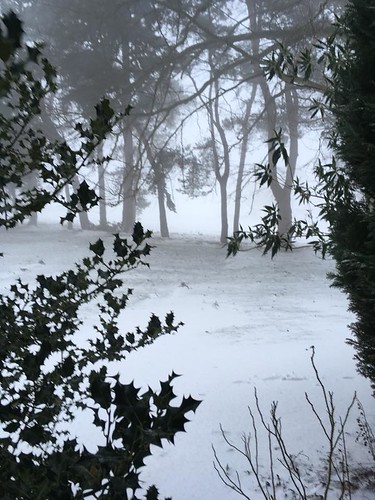
There was a moment -- well, more than a moment -- when I thought the sewing retreat was not going to happen last weekend. The snow, which started falling during the week before, starting falling again on Friday afternoon, and the final approach to the Retreat Centre up a steep hill became impassible to all but four-wheel-drive vehicles. Luckily we worked out an alternative route, and the great majority of the retreatants made it. Only a few perished in the snow (only kidding!)

5

From the Guild: The Guild of St Clare held its second Sewing Retreat in the teeth of the Beast from the East last weekend. The Carmelite Retreat Centre, where it took place, is in a delightfully rural location, at the top of Boars Hill. The roads were untreated, and retreatants defied the blizzard and the snowdrifts to make their way finally to the peace of sewing, spiritual conferences and, most importantly, the traditional liturgy. 

Wednesday, March 07, 2018

FIUV Magazine relaunched


Cross-posted from Rorate Caeli.

I have pleasure in presenting the new edition of the quarterly magazine of the Foederatio Internationalis Una Voce (Una Voce International), Gregorius Magnus: the 4th edition.

It can be downloaded as a pdf here:

Gregorius Magnus 4

The 4th issue of Gregorius Magnus (February 2018) is 24 pages about:

• Position Paper 32: The Extraordinary Form and Islam
• UV General Assembly in Rome, Nov 2017
• Book Review: History of the FIUV
• Irish Abortion Referendum
• Una Voce in England, Canada, Ireland, Australia, New Zealand and Nigeria

This is a re-launch for Gregorius Magnus, which was published briefly in 2012. We hope that it will provide a truly international space for news and discussions important to the Traditional Movement, as well as an attractive platform for the FIUV.

Support the work of the LMS by becoming an 'Anniversary Supporter'.

Tuesday, March 06, 2018

Book review: History of the FIUV by Leo Darroch


This review is in the current edition of the Latin Mass Society's magazine Mass of Ages. Cross posted from Rorate Caeli.

Una Voce: the History of the Foederatio Internationalis Una Voce 1964-2003, by Leo Darroch (Gracewing; 467pp)
Review by Joseph Shaw

Buy it from the LMS bookshop, Amazon.co.uk, or Gracewing

Leo Darroch has produced a substantial and fascinating volume on the FIUV, commonly known as Una Voce International, from its beginnings up to the end of the presidency of the late Michael Davies. Davies’ predecessor, Eric de Savanthem, was President for 30 years, from the early days of the organisation, so the book revolves around these two remarkable men.

Because of the nature of the material, the book is episodic in character. Some of these episodes are very revealing about the state of the Church at the time they took place, so I will devote this review to three of them.

The first is the interview and associated correspondence which took place between de Saventham and Archbishop (later, Cardinal) Giovanni Benelli, then Prefect of the Congregation for Divine Worship, in 1976 (pp127ff). De Saventham summarised Benelli’s position in a letter to him following the meeting:

Monday, March 05, 2018

The Epistles of the first three Sundays of Lent

St Paul
Peter Kwasniewski has an excellent discussion of the contrast between the Epistles (first readings) of the first three Sundays of Lent given us by the ancient Lectionary, and the Second Readings of Sunday Mass, usually Pauline Epistles, offered us by the 1969 Lectionary. Since there are three years of readings in the Ordinary Form there are nine passages to compare with the three of the EF. Not one of these nine passages so much as mentions the major theme of all three of the EF's selections: the importance of repentance from a sinful lifestyle, above all in relation to sexual sins.

So concerned were the compilers of the reformed Lectionary to avoid mentioning sin that they even cut out of the passages bits where the subject came up.

Friday, March 02, 2018

Letter on older Traditionalists, in the Catholic Herald

IMG_0246
The LMS Pilgrimage to Our Lady of Caversham last weekend.
Today the Catholic Herald has published my letter answering Michael Davis (not to be confused with the late Michael Davies), who criticised the older generation of Catholics attached to the Traditional Mass.

I have written a blogpost about his article here.

Sir,

Michael Davis’s attack on the ‘older generation’ of Traditional Catholics (Comment, 16th Feb) misses the mark. The tone of the mainstream lay movement for the preservation of the Traditional Mass, represented by the Latin Mass Society and it sister organisations around the world, was set by men like Dietrich von Hildebrand and Eric de Saventham, both of whom risked their lives for their opposition to Hitler; Hamish Fraser, a convert from Communism; and Hugh Ross-Williamson, deselected as a Labour parliamentary candidate for being too left-wing. The extraordinary devotion of Traditional Catholics to the Papacy, over decades when they received little but hard knocks from the hierarchy, prevented them from taking the easy option of leaving the structures of the Church. Now that their central argument has been vindicated—the ancient Mass was never abrogated—we can see that their obedience to the bishops of their day was supererogatory.

Thursday, March 01, 2018

Position Paper on the Sanctoral Cycle


Today I publish the last of the FIUV Position Papers: The Sanctoral Cycle of the Extraordinary Form. Go over to Rorate Caeli to read it.

Researching the calendar, specifically the cycle of saints' days, has been very interesting. It has underlined how reletively empty of saints the 1969 calendar is (although the Novus Ordo has picked up a few more over the decades since then). If you go to a weekday Mass in the Novus Ordo, the priest will more often than not be wearing green, during 'Ordinary' time, or violet in Advent or Lent, or white in Paschal time: the colour of a 'ferial' day, when no feast is being celebrated. I have heard of this being taken even further, and a preference for the ferial Mass taking over even on days when according to the rules there should be a saint. But in the Traditional Mass ferial Masses are downright rare. On the few days each week when there is no saint to celebrate, priests tend to say a Votive Mass.