 |
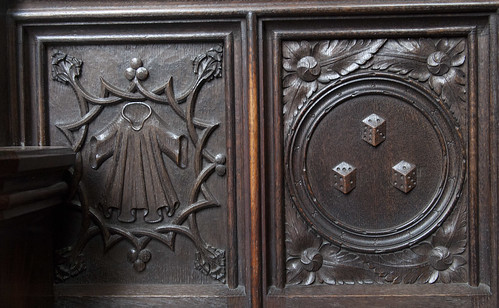
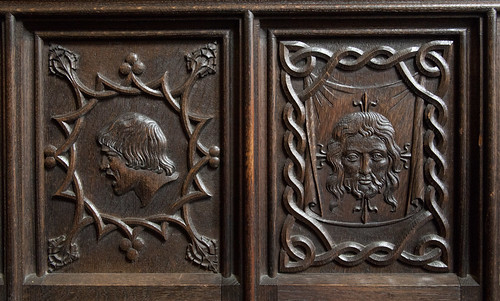
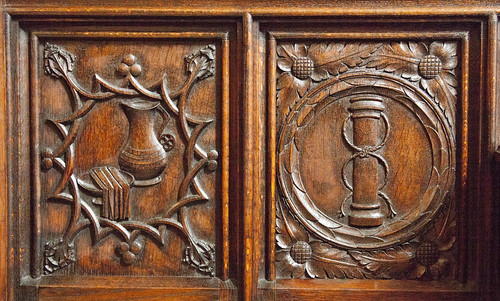
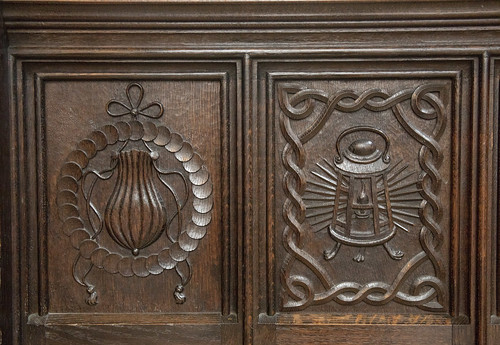
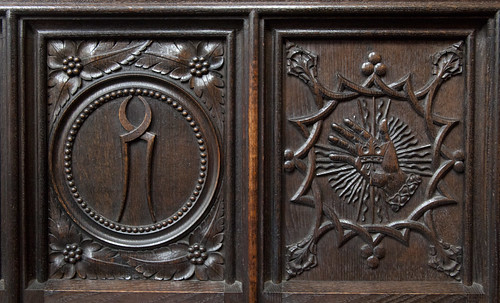
| The pliers for the nails, and the Sacred Wounds. |
1: Leon Podles' argument about masculinity.
2: How Podles thinks the Church became feminised in the High Middle Ages
3. Doubts about Podles' historical argument.
4. The role of Rationalism and Romanticism in confirming the feminine image of the Church.
5. The liturgy, and a solution to the problem.
One of the things rather neglected by Podles is the liturgical reform. The reason is that he wants to locate the source of the problem of feminisation way, way back, in the High Middle Ages. I don't entirely disagree that some developments then had bad consequences in this regard, but it is not easy to show a clear and consistent picture of a feminised Church from then until today. The picture is complex, with counter-currents and counter-examples.
Poddles has much more to say about Protestantism in America before the 20th century than he does about Catholicism, and it is hardly surprising that the people he quotes - essentially, Evangelical preachers and those responding to them - should have had a problem with feminisation. For these preachers relied very heavily on the emotions, and the expression of emotion, and neglected the will and the intellect. This is always going to be a hard sell for men. Mgr Benson, whom I quoted a couple of posts ago, tells us that, at least in England in 1913, religious emotion was kept in check. The less fervent - including a lot of men - were reassured that belief was a matter of will and action, that is to say, the practice of the Faith. Telling such people that they ought to feel the movement of the Spirit can lead to disaster. The 18th century poet George Crabbe describes a man who wants to repent his sins, goes to a revivalist preacher, and is eventually told that the absence of such feelings is an indication that he is damned. Understandably, the poor man hangs himself.