Thursday, October 18, 2012

LMS Pilgrimage to Aylesford

Last Saturday was the LMS Pilgrimage to Aylesford, the home of the Brown Scapular. This ancient Carmelite priory was bought back by the order and re-edified in the 1950s; we had Mass in the Relic chapel, which houses the skull of St Simon Stock.
IMG_1086
Fr Tim Finigan was the celebrant; as well as preaching, he gave a spiritual conference after Mass, and celebrated Benediction for us. It was the feast of St Edward the Confessor, King and Confessor, and coincidentally Bl Alexandrina da Costa's day in the new calendar; she was a contemporary of the Fatima seers, a suffering soul who experienced many visions. Fr Finigan spoke about her extraordinary life. (You can get an excellent short book about her here.)

Fr Tim has blogged about the day here, and the Reluctant Sinner here.
IMG_1106 
Mass was accompanied with some wonderful polyphony, by Taverner, sung by Cantus Magnus, led by Matthew Schellhorn.

IMG_0798 IMG_1137 Someone was even clothed in the Brown Scapular, which was given to St Simon Stock by Our Lady with the promise of help for that those who wear it with devotion.

IMG_1140
More photos.

Wednesday, October 17, 2012

Mass in St Peters to be celebrated by Card Llovera

The Traditional Mass in St Peter's on 3rd November (at 3pm) which I have mentioned on this blog before will be celebrated by His Eminence Cardinal Cañizares Llovera. 
It is reported on Gloria TV!

Official website http://unacumpapanostro.wordpress.com/  

To help the pilgrims during their stay in Rome our FIUV Secretary, Thomas Murphy, has arranged additional services for Thursday (1st) and Friday (2nd).

The events listed for Saturday 3rd November have been arranged by the official pilgrimage organisers. The conference on the Saturday evening has been arranged by the Centro Culturale Lepanto of Rome.  Most of these talks will be in Italian.  The Masses on 4th November are the usual traditional form Masses available in Rome on Sunday. The full programme is shown below.  We hope that our members travelling to Rome for this pilgrimage will find this information helpful.   The site with a street map of Rome may be helpful http://www.rome.info/map/  

---------------------------------------------

All those participating in the Fœderatio Internationalis Una Voce Pilgrimage to Rome are encouraged to attend the following:

Thursday, 1st November - Feast of All Saints The Holy Sacrifice of the Mass in the Extraordinary Form of the Roman RiteTime: 11.00 hrs
Location: Church of Sant'Agata dei Goti, Via Mazzarino, 16 - 00184, Rome  [adjacent to the Via Nazionale and the Mercati Traianei] http://romanchurches.wikia.com/wiki/Sant%27Agata_dei_Goti Celebrant & Preacher: Rev. Fr. John Hunwicke

Traditional Evening Devotions including the Holy Rosary and Benediction of the Blessed SacramentTime: 15.30 hrs
Location: Basilica of Ss. XII Apostoli, Piazza dei Santi Apostoli, 51 - 00187 Rome   [At the end of the Via del Corso near to Piazza Venezia] http://romanchurches.wikia.com/wiki/Santi_Apostoli  Celebrant & Preacher: Rev. Fr. John Hunwicke

Friday, 2nd November - Feast of All Souls The Holy Sacrifice of the Mass in the Extraordinary Form of the Roman RiteTime: 11.00 hrs
Location: Church of Sant'Agata dei Goti, Via Mazzarino, 16 - 00184, RomeCelebrant & Preacher: Rev. Fr. John Hunwicke 

Traditional Evening Devotions including the Holy Rosary and Benediction of the Blessed SacramentTime: 17.00 hrsLocation: Church of Sant'Agata dei Goti, Via Mazzarino, 16 - 00184, Rome Celebrant & Preacher: Rev. Fr. John Hunwicke 

Saturday, 3rd November Exposition of the Blessed Sacrament
Time: from 10.00 hrsLocation: Church of San Salvatore in Lauro, Piazza di San Salvatore in Lauro, 15 - 00186, Rome. [Close to the Piazza Ponte S. Angelo]    http://rometour.org/church-san-salvatore-lauro-laurel-wood-bay-trees.html   Procession from Church of San Salvatore in Lauro to Saint Peter's BasilicaTime: 13.15 hrs The Holy Sacrifice of the Mass in the Extraordinary Form of the Roman RiteTime: 15.00 hrsLocation: St. Peter's Basilica, Piazza San Pietro - 00193 Rome

Celebrant: His Eminence, Antonio, Cardinal Cañizares Llovera, Prefect of the Congregation for Divine Worship 'Having Lived in Expectation of Summorum Pontificum'

Tuesday, October 16, 2012

Server training, Vocations retreat, Clergy retreat: with the FSSP

I'm delighted to publicise these events organised by the Fraternity of St Peter in England, making full use of their house, 'St John Fisher House', in Reading. Please pass on the news to anyone who might be interested.

Altar servers’ weekend (residential): at St John Fisher House in Reading on 26-27-28 October 2012:For single Catholic men between 18 and 35 years of age (under 18 please contact us).

Starts on Friday 26 October at 6pm – ends on Sunday 28 October mid-afternoon.

Led by Fr Armand de Malleray, FSSP, with Fr Matthew Goddard, FSSP.

In a convivial atmosphere, come and learn (or improve) how to set the vestments and sacred items before Mass and to serve EF Masses and Benediction. EF Mass on the Friday evening, Saturday morning and Sunday morning. Limited overnight accommodation: please book now. Non residential participants welcome.

Cost [for the whole weekend, 2 days + 2 nights, including full board accommodation at St John Fisher House]: no set price for students or unwaged – any donation welcome; others: £50 suggested.

Contact: Tel: 0118 966 5284; Email: malleray@fssp.org; website: www.fssp.co.uk/england.

Vocation discernment weekend: 14-15-16 December 2012 at St John Fisher House in Reading:

For any English-speaking Catholic men between 18 and 35 years of age (under 18 please contact us).

Starts on Friday 14th December 2012 at 6pm (arrivals from 5pm) – ends on Sunday 16th December 2012 at 3pm. Led by Fr Armand de Malleray, FSSP, assisted by Fr Matthew Goddard, FSSP.

Location: St John Fisher House, 17 Eastern Avenue, Reading, RG1 5RU, England. Off-street parking available.Programme: Spiritual conferences, socials, Holy Mass each of the three days (Extraordinary Form of the Roman rite) including polyphonic Sung Mass on Sunday, silent prayer, and optional private talk with Fr de Malleray, FSSP. Fr de Malleray will explain what a vocation is in general and to the priesthood in particular.Cost [for the whole weekend, 2 days + 2 nights, including full board accommodation at St John Fisher House]: no set price for students or unwaged – any donation welcome; others: £50 suggested.Contact: Tel: 0118 966 5284; Email: malleray@fssp.org; website: www.fssp.co.uk/england.We are looking forward to welcoming you here. Please pray for our 9 seminarians from these Isles. God bless you!


Clergy retreat in Bavaria 15-19 April 2013: details here.

Monday, October 15, 2012

FIUV Position Paper on Latin in Seminaries

Today I'm publishing, on Rorate Caeli, a FIUV Position Paper about Latin in Seminaries. Go over there to read it.

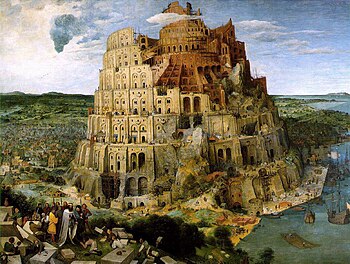
In the English-speaking world we have become used to international business being conducted in our cradle language, which makes things very easy for us. It is not so in the Church, because of the importance of French, German, and Italian, from the perspective of the Vatican. English has not replaced Latin as a common language (not that it should); instead we have something alarmingly like the Tower of Babel, where not one language - Latin - is essential for a curial official who wants to be on the button, but three or four.

It is said that the Catechism of the Catholic Church was first composed in French. Other documents are prepared in Italian or German. In each case, if it is an official Church document (as opposed to a sermon or allocution) it is translated into Latin, and this Latin translation is then the official version. Other languages are translations of the Latin, and even the original one must conform to the Latin. This gives not one but two opportunities for translators to put a little spin on the meaning of the text, and if the people who prepared the original in some vernacular language are not very on the ball, and very good Latinists, what they agreed could end up being seriously distorted.

I don't know if the Catechism (for example) suffered in going from French to Latin, but a great many documents suffer going from Latin to English and other languages: as I have noted on this blog, this has happened again and again and again. Even if the Vatican's translators had no axe to grind (and it is hard to resist the impression that they prefer liberal formulations), a gap between the meaning of the original text and a translation is inevitable. 

How the use of multiple vernaculars is supposed to be easier for the transaction of the Church's business, than the use of Latin, is a mystery. But even at its best, this is a situation in which we are cut off from the past, from what the doctors and saints want to say us, and what we so desperately need to hear.

Wednesday, October 10, 2012

Gregorius Magnus: new journal of the Una Voce Federation

FIUV, the Una Voce Federation, has launched a new journal. Here it is in full. Future editions will be available electronically to 'Friends' of FIUV: a new opportunity for individuals to support and be involved in the Federation. There are some details in Gregorius Magnus, but anyone who'd like to be Friend should email friends@fiuv.orgGregorivs Magnus n. 1 September 2012

Saturday, October 06, 2012

Liberalism into sede vacantism

The Tablet is getting a good kicking (and here, here, and here) this weekend because of the attack, in its leading article, on the notion of the 'Hermeneutic of Continuity'. It is terribly confused, but it is based on the same idea promoted in its pages before, and which I have criticised on this blog before: that the Second Vatican Council contradicted the earlier teaching of the Church.

This means that either Vatican II was a heretical pseudo-council, or that every previous council was. Some people on the conservative end of the spectrum of opinion are accused of accepting the first option. But this is a very moderate position compared to the second option. After all, there have indeed been the occasional heretical pseudo-council in the history of the Church, but to say that all but one of the councils have been heretical pseudo-councils just undermines the idea that there is any teaching authority at all. And if there's no teaching authority from 33AD to 1961AD, what sort of authority can be claimed for the teachings of the Church from 1962 to 1965?

'There is no continuity between whatever between the declaration Nostra Aetate, on relations with Jews and other faiths, and the previous two millennia of Christian anti-Semitism - as promoted, say, by the Fourth Lateran Council of 1215.  ...Again, the council's Declaration on Religious Liberty flatly contradicts Pope Pius IX's encyclical known as the "Syllabus of Errors", which was itself in continuity with what had been understood in traditional Catholic teaching as the doctrine that "error has no rights".'

There is a tangled morass of confusion in these two sentences, the most important of which is between teaching, and doctrine, on the one hand, and attitudes (such as anti-Semitism) and 'understandings', on the other. But it is clear what she (the Editor, Catherine Pepinster) wants to convey to her readers: that the teaching of the Church was changed by Vatican II.

Sending back the deposit of faith?
And it is here that she joins hands with the sede vacantists. For if Vatican II attempted to change the teaching of the Church, that attempt would of course have failed: the deposit of Faith was given to the Church by Christ, it can't be given back and exchanged for something else. She may think the changes were a good thing, but if she thinks Vatican II contradicted Lateran IV, and also presumably the other 19 or so (depending on who is counting) General Councils of the Church, there is no way that Vatican II could be right and the other 20 Councils wrong.

Just think about it, Miss Pepinster. On the one hand, you have 20 Ecumenical Councils saying one thing. On the other hand, you have, according to you, Vatican II saying something different. All these Councils claim the same authority: the Pope and the Bishops of the world gathered together are guided by the Holy Spirit and in this way protected from error (not, incidentally, inspired by the Holy Spirit like the authors of scripture), in accordance with Jesus' promise not to abandon His Church. If the Holy Spirit guided Vatican II, why not the others? And if the others were all failures, if they were all abandoned by the Holy Spirit, for what earthly reason would anyone believe that He came to the rescue of Vatican II? (Because we, personally, like what Vatican II said? That would make it as infallible as, well, a Tablet editorial.)

Catholic Liberalism of this kind is self-defeating in the most obvious and dramatic way. I can only assume that the people writing this kind of bilge are attached the Church emotionally and culturally, and for non-intellectual reasons reject the conclusion which follows from their own arguments: that there is no teaching authority, no promise of Christ to the Church, and ultimately there is no Church. But let them beware: very few people under 40 have that kind of cultural attachment to the Church. You try this kind of argument on a Catholic undergraduate with half a brain and he, or she, will draw the obvious conclusions.

Thursday, October 04, 2012

New National Chaplain for the Latin Mass Society

Fr Southwell has now gone to Rome, for his much-deserved study sabbatical; see here for his send-off. We are very lucky to have Mgr Read as our new chaplain: I am really delighted. Our press release follows. The photos are mine, from the London Colney Priest Training Conference in 2009.
IMG_0076
The LMS is very pleased to announce the appointment of Mgr Gordon Read, Chancellor of Brentwood Diocese, as its new National Chaplain, following the recent departure, for two years of study at the Angelicum in Rome, of Fr Andrew Southwell. He will take up his new office with immediate effect. Mgr Read is parish priest of St Mary Immaculate and The Holy Archangels, Kelvedon, Essex, and has been a long time supporter of the work of the Society.

He is widely held in high regard by many Catholics of all persuasions. In addition to his responsibilities as parish priest, he is rural dean of Colchester, Chancellor and Judicial Vicar of Brentwood diocese, a member of the Bishop’s College of Consultors, Vice- chair of Governors, St Benedict’s College, Colchester, and Trustee of the Canon Law Society of Great Britain and Ireland.

A frequent contributor of articles to canon law journals, his advice on canonical matters is widely sought. In 1998 he was appointed honorary Papal Chaplain by Pope John Paul II in recognition of his work for the Diocese of Brentwood. In 2005, Pope Benedict XVI appointed him Prelate of Honour. Commenting on the new appointment, LMS Chairman Dr Joseph Shaw said: 'We are delighted that Mgr Read has agreed to be our National Chaplain. He is a very long-standing friend of the Society, and a priest regarded with great affection and respect in both the Society and his diocese. His expertise, practical experience, and wisdom will be a great assistance to us in our ever-expanding work.'
 IMG_9694