Showing posts with label Latin. Show all posts

Thursday, August 09, 2018

Successful Latin Course from the LMS

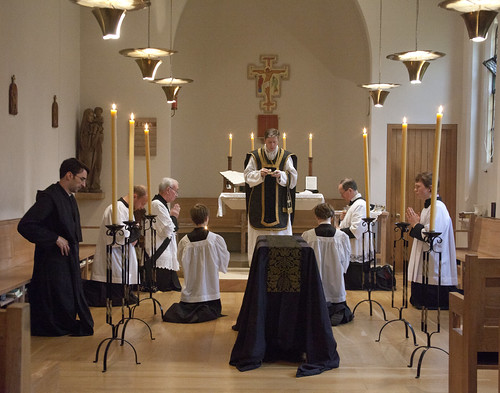
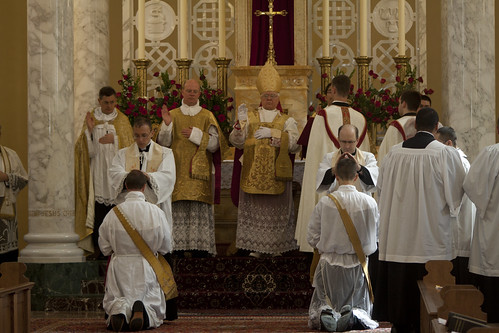
IMG_7132

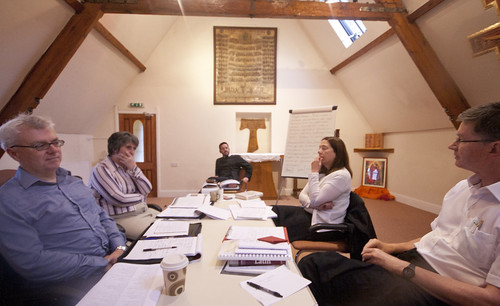
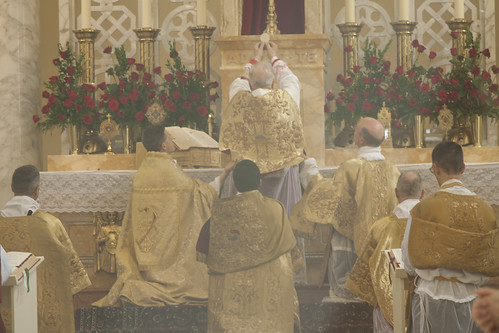
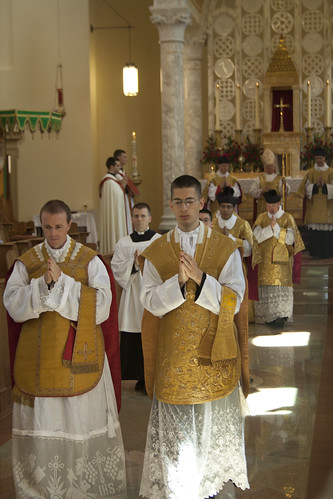
Last week the Latin Mass Society's residential Latin Course took place. We were close to capacity in the venue, the Carmelite Retreat Centre at Boars Hill near Oxford. With the help of Matthew Schellhorn and a number of singers who were present as students Sung Mass was celebrated each day and Compline twice. The two priests who attended as students took turns with Fr John Hunwicke, who was teaching, to celebrate the Sung Masses, as well as Low Masses before breakfast.

Wednesday, January 10, 2018

LMS Latin Course booking open

IMG_1824
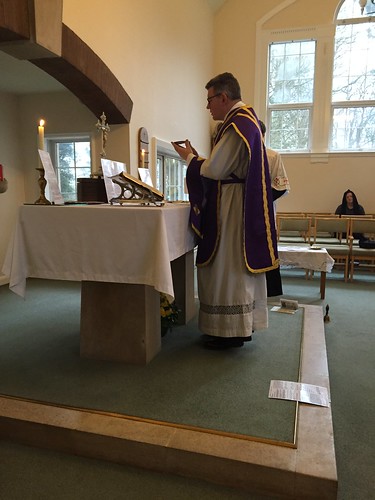
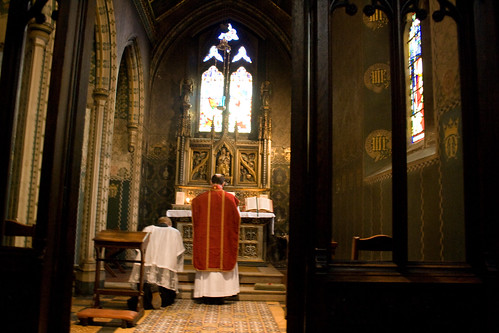
Fr Richard Biggerstaff celebrating the Vetus Ordo
in the chapel of the Carmelite Retreat Centre
for the Guild of St Clare Sewing Retreat last year.
Resideintial Latin course for adults 30th July to 3rd August 2018.

Since 2009 our intensive Latin course has helped a few dozen priests and laity to brush up their Latin for liturgical and scholarly purposes, in a Catholic atmosphere and with daily Traditional Mass.

Now it is taking place in a more accessible venue with more space and lower costs. Don't miss out!

Book here!

Five days with Fr John Hunwicke and Fr Richard Bailey, not in Wales this year but in the Carmelite Retreat Centre in Boars Hill near Oxford.

Prices:
Full price is £340 (+ £30 optional single room supplement); without accommodation £290.
LMS Member £290 (+ £30 optional single room supplement); without accommodation £240.
Clergy, students and Seminarians full price £240 (+ £30 optional single room supplement); without accommodation £190.
Clergy, students and Seminarians LMS member £190 (+ £30 optional single room supplement); without accommodation £140.

Book here!

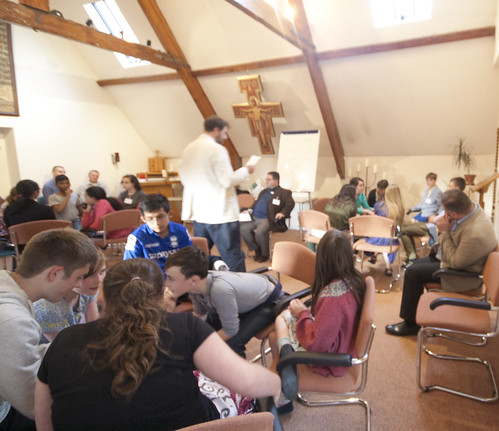
IMG_0032
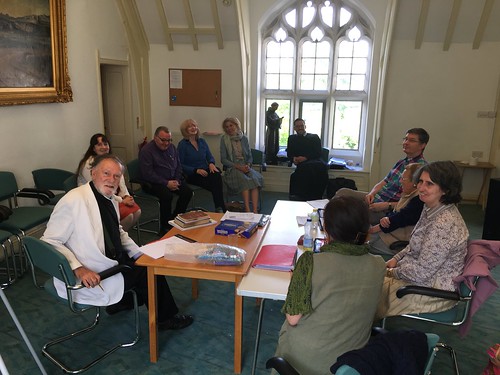
Some Latin Course students with Fr Richard Bailey last year.
Support the work of the LMS by becoming an 'Anniversary Supporter'.

Monday, July 31, 2017

Clifford Longley on what Latin expresses

IMG_0918
Prayers for the Absolution at the Catafalque at a Requiem Mass: Fr Mark Elliot Smith (centre)
at Our Lady of the Assumption, Warwick Street.
Clifford Longley is not a man I expect to agree with: still less his column in The Tablet, which I've criticised here and here. Last weekend, however, he said something, in his own way, which I have been saying a lot recently, particularly in the talk I gave at the Roman Forum in the Gardone Riviera.

This is an extract. Subscribers can read it all here.

He starts by noting that people who attend the Mass in English do not, actually, understand it: 'They get the essentials, but it’s a fair bet a lot of important stuff goes right over their heads – as it does over mine.' He continues:

Friday, June 30, 2017

Book now for the LMS Latin Course: 24-28 July

Reminder: don't leave it too late!

IMG_0471


Latin is the doorway to a full appreciation of Catholic culture, spirituality, liturgy, history, theology and law. St John Paul II told young people:

Let them realise that this remark of Cicero (Brutus 37, 140) can be in a certain way referred to themselves: ‘It is not so much a matter of distinction to know Latin as it is disgraceful not to know it.’ (Address to the Latinitas Foundation, 27th November 1978)

Don't miss out on the Latin Mass Society's intensive, residential Latin Course, which takes place from Monday to Saturday, 24th to 28th July. Book online here.

Thursday, June 01, 2017

Can non-Latinists pray the Latin Mass?

Reposted from Feb 2016
----------------------------------------------

IMG_9520
Eloquent gestures and expressive ceremonies in the Traditional Requiem Mass.
Dr Robert Kinney (his doctorate is in Pharmacy, interestingly) has argued over at the Homiletic and Pastoral Review that is it impossible actually to pray in a language one does not understand, or with a celebrant who is using a language one does not understand.

[A]s Catholics, we believe that the Mass is the most powerful prayer on earth. If the Mass is said in an unfamiliar or entirely unknown language, though, can it properly be labeled as a “prayer”? Or, are the words uttered merely beautiful-sounding syllables without willed meaning?

This would have some pretty radical implications for Catholics visiting foreign countries and Masses celebrated for international congregations: in Lourdes, for example, it is common to find Masses celebrated in several languages, one lection in German, one in English, a prayer in French, another in Italian, and so on. The thought 'they'd be better off using Latin' is one which Dr Kinney presumably shares, since praying just a snatch of the Mass, or hearing just one lection meaningfully, must count as almost pointless.

It also implies that the silent prayers (the 'priestly prayers', such as the Lavabo) of the Novus Ordo are so much mumbo jumbo, even when Mass is celebrated in the congregation's mother tongue. If you can't hear the prayer, you can't understand it, right? As so often, attacks on the Traditional Mass rebound on the 1970 Missal. That Bugnini and Pope Paul VI: they got it all wrong, eh, Dr Kinney?

Friday, April 07, 2017

Debate about teaching music (and Latin)

James MacMillan, Patron of the Latin Mass Society, has signed a joint letter on musical education in response to an article by Charlotte Gill wrote in the Guardian. Gill wrote:

For a creative subject, music has always been taught in a far too academic way, meaning that theoretical knowledge is the main route to advancement. While there are routes into musical careers for the untrained, and many pop, rap and grime artists have never studied music formally, there are also dozens of choirs and amateur collectives that put a huge focus on musical notation.

This is a cryptic, tricky language – rather like Latin – that can only be read by a small number of people, most of whom have benefited from private education. Children who do not have the resources, or ability, to comprehend it, are written off. Even when they are capable performers.


Gill is winding a good few issues up together here. We might agree with her criticism of the 'Grade' system of learning instruments, followed by many children, that it can make learning an instrument something of a grind. But a more important issue she has left out is the poor quality (or motivation) of many music (instrument) teachers. This is not be unrelated to their poor pay, and their poor treatment by many schools, where they have to eke out an existence on the fringes of the timetable and the school community, often working for several schools at once, resented by the teachers of other subjects for taking children out of their classes. It's a pretty bad system, all things considered. (Would anyone tolerate this for sports? For art? For Maths?)

Tuesday, September 13, 2016

Is Mass in the vernacular inaudible?


Reposted from April this year, partly because it's had a new comment.
----------------------------------------

In the Catholic Herald of 18th March, Ann Widdecombe suggested that it frequently is: so much so, that with the withdrawal by her parish priest of sheets with the proper prayers and readings printed on them, she has resorted to using a hand missal, as have many others in her parish.

There have been a lot of complaints from liberals about the unintelligibility of the vocabulary of the 2011 English translation, which contains hard words like 'ineffable', 'venerable' and 'contrite', but Widdecombe's difficulty is a separate issue entirely. She wants a printed text to look at because she can't understand badly read or heavily accented lections, mumbled psalms, or words overlaid with the crying of babies. (Her article is not on the Catholic Herald website, but on the right is the money quote.)

Saturday, June 04, 2016

Esperanto vs. Latin

IMG_8459
Last year's Summer School - a bit of Latin is included, naturally. Details for this year are here.

The weekend The Catholic Universe has printed quite a long letter of mine on the subject of Latin and Esperanto, in response to an equally long letter praising Esperanto in last week's Letters.

Last time I mentioned Esperanto on this blog - as an aside - I got some rather irate comments, so this time, well, come and get me! My sympathy with the idea of an artificial language of any kind is simply zero. If people want to learn Elvish, Klingon or Esperanto, they are, I suppose, no more wasting their time than if they were playing patience on their IPhones (which seems to be de rigour on the commuter trains out of London these days). I don't want to criticise such harmless recreations. But to propose it as an educational task for children is as insane as suggesting it as a substitute for Latin (or any other language) for comunication within the Church. Artificial languages are languages without a history, culture, or literature, or at least without one going back before (in the case of Esperanto) 1870.

Sunday, May 01, 2016

Two insights into Latin from non-Catholic sources

IMG_9717
Sign up for the LMS Latin Course with Fr John Hunwicke
and Fr Richard Bailey here.
Two recent news stories stuck me for their relevance to the debate about the use of Latin in the Church.

First, the Victoria and Albert Museum are putting on an exhibition of English needlework from the Middle Ages, called 'Opus Anglicanum', The Guardian carried a story about it, noting

'for the first time in decades, the museum has dared to use Latin in an exhibition title.'
It explained:

“We were a bit worried that people would find the title baffling,” said co-curator and textile expert Clare Browne. “Older people thought that younger people would find it off-putting – but in fact younger people thought it was mysterious and exciting.”

This is a startling assertion, but only because it is so exactly what we have found in the movement for the Traditional Latin Mass. I could have said it myself.

The second is a report in The Economist about whether being a native English-speaker is an advantage in a world where English is increasingly the language of business. It reported some interesting and surprising advantages enjoyed by those working in English for whom English is not their cradle language.

Ingenious researchers have found that sometimes decision-making in a foreign language is actually better. Researchers at the University of Chicago gave subjects a test with certain traps—easy-looking “right” answers that turned out to be wrong. Those taking it in a second language were more likely to avoid the trap and choose the right answer. Fluid thinking, in other words, has its down-side, and deliberateness an advantage.

(I've found an article about this research here; the reseach paper itself is here.)

From about the 8th until well into the 17th century, almost all theology and philosophy in the West was done in a language at some distance, at least, from the cradle language of those involved: Latin. In theology, a great deal of work continued to be done in such a language into the 20th century. This had so many advantages that it is hard to know where to begin: the ability of people to discuss ideas in the same language across the many linguistic barriers of Europe; the ability of people to engage directly with writers from the distant past in a language equipped with all the necessary technical terms; the levelling of the playing-field between linguistic groups; all the educational advantages ascribed to bi-lingualism, plus the special advantages of learning an inflected, and linguistically influential language like Latin.

But in addition to these manifold advantages, it would seem that people doing their philosophy and theology in Latin would actually have been doing better academic work because of the dispassionate 'deliberatness' involved in talking and writing in a second language. 

No wonder things went downhill after the loss of Latin as a working language for academics.

You can sign up for the Latin Mass Society's intensive five-day Latin course here.

Support the work of the LMS by becoming an 'Anniversary Supporter'.

Thursday, September 24, 2015

Is singing in Latin wrong?

Panis angelicus, for singing in Latin,
with a Japanese translation.
This weekend's Catholic Universe draws my attention to a story which appears in The Times of Malta, about a priest who did not allow allow a Latin hymn - Panis angelicus, to be exact - to be sung at a funeral, because it was not in Maltese.

According to the Universe, the priest, Fr Carmelo Tanti, said that is wasn't right for something to be sung which the people wouldn't understand.

The Times of Malta is incredulous, and it appears that Archbishop Scicluna of Malta agrees with them.

A while ago I wrote a post on this blog about a Pastoral Letter from Archbishop Scicluna's predecessor, Archbishop Cremona, which appeared to be a veiled attack on the Traditional Mass. Let us hope that things look up under Archbishop Scicluna.

Support the work of the LMS by becoming an 'Anniversary Supporter'.

Wednesday, April 30, 2014

St John Paul II on the liturgy.

I was in Manchester at the time of the canonisations, so I haven't had the chance to blog about it. I think Fr Zuhlsdorf makes an excellent point about these canonisations underpinning the interpretation of the Second Vatican Council proposed by Pope John Paul II: it gives St John Paul's writings greater authority.

This is important. One of the things I have understood better in the course of editing the FIUV Position Papers is just how much Pope St John Paul had to say about the liturgy, and I mean good things, obviously! Not just in documents explicitly about the Old Rite, such as Ecclesia Dei Adflicta, but all over the place. He was a Pope with a liturgical imagination.

I include below three quotations from just one Position Paper, 'The Extraordinary Form and Western Culture.' Read the paper here. He is also quoted to important effect in the paper on Silence and on Latin as a Liturgical Language.

Address to the Bishops of the North Western region of the United States, in their ad limina visit in 1998:
Active participation certainly means that, in gesture, word, song and service, all the members of the community take part in an act of worship, which is anything but inert or passive. Yet active participation does not preclude the active passivity of silence, stillness and listening... In a culture which neither favours nor fosters meditative quiet, the art of interior listening is learned only with difficulty. Here we see how the liturgy, though it must always be properly inculturated, must also be counter-cultural.

Address to the Plenary Session of the Congregation for Divine Worship, September 21, 2001.
The People of God need to see priests and deacons behave in a way that is full of reverence and dignity, in order to help them to penetrate invisible things without unnecessary words or explanations. In the Roman Missal of Saint Pius V, as in several Eastern liturgies, there are very beautiful prayers through which the priest expresses the most profound sense of humility and reverence before the Sacred Mysteries: they reveal the very substance of the Liturgy.

Apostolic Exhortation Ecclesia in Europa (2003) 60.
Nor should we overlook the positive contribution made by the wise use of the cultural treasures of the Church. These can be a special element in the rekindling of a humanism of Christian inspiration. When properly preserved and intelligently used, these living testimonies of the faith as professed down the ages can prove a useful resource for the new evangelization and for catechesis, and lead to a rediscovery of the sense of mystery. … artistic beauty, as a sort of echo of the Spirit of God, is a symbol pointing to the mystery, an invitation to seek out the face of God made visible in Jesus of Nazareth.

St John XXIII also had a lot to say, and to counter the strange view that he was some kind of free-wheeling liberal I've blogged about his writings a number of times, notably his Apostolic Constitution Veterum Sapientia on the importance of Latin. Yes, the man who called Vatican II almost simultaneously defended the use of Latin and demanded it be not only retained by restored, and teaching in it strengthened. See here and here.

Wednesday, October 30, 2013

The value of tradition: Inspectis dierum nostrorum

Mass1I mentioned yesterday the document Inspectis dierum nostrorum, which up to now has been available in English only as a scanned image in a dark corner of the website of the US Bishops' Conference. It has now been retyped so it is much more legible and also searchable. I always wonder whether any particular thought goes into the non-availability of particular documents on the Vatican website; we owe to EWTN's library and various others a huge number of items which, I suspect, some people in Rome would rather had disappeared down the memory hole. Inspectis dierum is now available on the LMS website here (as a Word file) and in pdf format here.

Inspectis dierum contains a very interesting attack on the notion one constantly meets in modern Catholic theological studies, that theology should be done by juxtaposing the Bible with modern concerns and problems. The Bible itself is then subjected to the kind of (often very shoddy) 'scientific' analysis which seems designed not only to rid us of all reverence for the sacred text, but to relativise its contents to such a degree that we will end up saying: so, this is what some editor thought, unless it inspires some thoughts of my own, why should I care?

The traditional approach is to say that the interpretation and application of the Bible to pastoral issues by the Fathers and Doctors of the Church is normative for us. We are not presented with the Biblical text in an aching vacuum, but in the context of centuries of commentary which, while it can go in different directions and leave many things open, is on many controversial topics actually pretty unanimous. This tradition is a source of theology alongside the sacred texts themselves.

If the Church began in 1962 with the opening of the Second Vatican Council, then the traditional view of theology has to be eradicated. Inspectis dierum, which is supposed to set the tone for the study of the Fathers in seminaries, is having none of that. Here are some quotations. 

Today there are many theological concepts or tendencies which, contrary to the indications of the decree Optatam Totius (No. 16), pay little attention to the fathers’ witness and in general to ecclesiastical tradition, and confine themselves to the direct confrontation of biblical texts with social reality and life’s concrete problems with the help of the human sciences. These are theological currents which do without the historical dimension of dogmas and for which the immense efforts of the patristic era and of the Middle Ages do not seem to have any real importance. In such cases, study of the fathers is reduced to a minimum, practically caught up in an overall rejection of the past.


            In various theologies of our times which are detached from the stream of tradition, theological activity is either reduced to pure “biblicism” or it becomes a prisoner of one’s historical horizon by being taken over by the various fashionable philosophies and ideologies of the day. Theologians, who are practically left to themselves, think that they are doing theology but are really only doing history, sociology, etc., flattening the contents of the Creed to a purely earthly dimension.

...
Private Mass1

To follow the living tradition of the fathers does not mean hanging on to the past as such, but adhering to the line of faith with an enthusiastic sense of security and freedom, while maintaining a constant fidelity toward that which is foundational: the essential, the enduring, the unchanging fidelity usque ad sanguinis effusionem to dogma and those moral and disciplinary principles that demonstrate their irreplaceable function and their fecundity precisely at the times when new things are making headway.

...


The first thing that strikes us in their [sc the Fathers'] theology is the living sense of the transcendence of the divine truth contained in revelation. Differing from many other ancient and modern thinkers, they give proof of great humility before the mystery of God contained in Sacred Scripture on which they, in their modesty, prefer to be mere commentators who are careful not to add anything to it that might alter its authenticity. It can be said that this attitude of respect and humility is none other than lively awareness of the insuperable limits that the human intellect experiences in the face of divine transcendence.

...

It is obvious that the study of the fathers also requires adequate instruments and aids such as a well-equipped library from the patristic viewpoint (collections, monographs, reviews, dictionaries), as well as knowledge of classical and modern languages. Given the well-known deficiencies in the humanities in today’s schools, everything possible will have to be done to strengthen the study of Greek and Latin in centers of priestly formation.

The full text can be downloaded LMS website here (as a Word file) and in pdf format here.
Mass9

Photos show St Cuthbert's Seminary at Ushaw, Country Durham, during the Latin Mass Society's Priest Training Conference of 2009. Having acquired the reputation as the most 'progressive' seminary in England and Wales, it is now closed. It is to be hoped that the magnificent chapel and other buildings find some worthy use. More photos here.

Tuesday, October 29, 2013

Latin in Seminaries: more forgotten documents

2011 05 21_9724

The Ratio fundamentalis institutionis sacerdotalis is one of those documents readers of this blog are extremely unlikely to have heard of, but it is important: it sets the ground-rules for seminary education. There have been two editions, issued by the Congregation for Catholic Education, in 1970 and in 1980.

We may think of it as a intermediate document between the Second Vatican Council's Decree on Priestly Training Optatem totius, and the more specific national guidelines for seminary education, which should be produced by each Episcopal Conference and submitted to Rome for approval, the Ratio studiorum. Also relevant of course, and of a higher level of authority, is Canon Law, which has some things to say about seminary education, although the new Code of Canon Law (1983) came out after the most recent edition of the Ratio fundamentalis. Another important document is Bl John Paul II's 'Post Synodal Exhortation' on Seminary education, Pastores dabo vobis, which dates from 1992.

The distressing state of many seminaries around the world is not unconnected with the failure of the theoretically rather strict system control the Holy See has over what seminaries teach. For one thing, it is rather surprising that, after refreshing the Ratio fundamentalis only ten years after the first edition, the Congregation for Catholic Education never produced another edition. There have been a few developments since 1980, not least the new Code of Canon Law. Now responsibility for seminaries has been transferred to the Congregation for Clergy, and we may wonder if they will do a new edition. If they do, no doubt it will take some time to prepare.

2011 05 21_9729

In addition, it appears that the Bishops' Conference of England and Wales have never proposed a Ratio studiorum for their seminaries. The obligation to produce one and get it approved is spelled out in the Code of Canon Law (Canon 242), so to say that this is pretty surprising is an understatement. The process of checks and balances between the bishops and Rome is simply not functioning.

For what they are worth, let's see what these documents say about the teaching of Latin.

Optatem totius 13: Seminarians 'are to acquire a knowledge of Latin which will enable them to understand and make use of the sources of so many sciences and of the documents of the Church.'

Ratio fundamentalis (1970): 66. 'On the completion of these studies, any deficiency in knowledge which is required in a priest must be made good either before or during the study of philosophy, as n. 60 indicates. An example would be that reasonable proficiency in Latin, which the Church continually and insistently demands. A list and program of these studies should be included in the Scheme for Priestly Training.'

2011 05 21_9735

Ratio fundamentatlis (1980):  'It has been abundantly proved that the general orientations of the Council, if they are faithfully observed, do not irritate the People of God. They rebel only against novelties and excesses. For instance, the Council is far from having banned the use of the Latin language. Indeed, it did the contrary. Thus the systematic exclusion of Latin is an abuse no less to be condemned than the systematic desire of some people to use it exclusively. Its sudden and total disappearance will not be without serious pastoral consequences.'

Code of Canon Law (1983): Can. 249 'The program of priestly formation is to provide that students not only are carefully taught their native language but also understand Latin well and have a suitable understanding of those foreign languages which seem necessary or useful for their formation or for the exercise of pastoral ministry.'

Pastores dabo vobis (1992): 'Hence the importance of studying sacred Scripture "which should be the soul, as it were, of all theology", the Fathers of the Church, the liturgy, the history of the Church and the teachings of the magisterium.'

2011 05 21_9759

This last reference to the study of the Fathers of the Church refers back not only to Optatem totius (which is the source of the quote about biblical studies), but also to an Instruction on the subject, Inspectis dierum, which came out just three years before Pope John Paul's Exhortation. This, like Optatem totius, makes it clear that it is going to involve a knowledge of Latin.

Inspectis dierum (1989) 'The study of Patrology and of Patristics, which in its initial stage consists in outlining [the subject-matter], demands that manuals and other bibliographical resources be employed. When one arrives at difficult and involved questions of Patristic theology, however, none of these aids suffices: one has to go directly to the Fathers' very texts.'

'Given the well-known deficiencies in the humanities in today’s schools, everything possible will have to be done to strengthen the study of Greek and Latin in centers of priestly formation.'

Inspectis dierum is so interesting and important that, despite having blogged about it before, I am going to blog about it again. I have also had this document re-typed, so it can be more easily be read and searched. It is now available on the Latin Mass Society's website here (word .doc format; pdf format here).

2011 05 21_9809Photos: ordinations to the priesthood in the Seminary of the Fraternity of St Peter in Denton, Nebraska, USA, peformed by Bishop Fabian Bruskewitz, Saturday 21st May 2011. More here.

Monday, October 07, 2013

Pius XI on Latin: Officiorum omnium

I've blogged about this briefly before; now, thanks to some very generous help from various Latinists, I can present the whole thing in English for the first time online. It is particularly important to keep in mind the consistent teaching of the Church on issues like this, as expressed in proper magisterial documents printed in the Acta Apostolicis Sedis. They can be ignored, of course, but they don't go away.

This document is referred to repeatedly by Bl. John XXIII's Apostolic Constitution Veterum Sapientia (1962). Its importance lies not only in its content, but the fact that as an Apostolic Letter it is an act of the Papal Magisterium; many documents on this topic are Instructions, which are of lesser weight.

It helps to demonstrate the remarkable consistency of the teaching of the Church on the importance of Latin before, during, and after the Second Vatican Council: compare the above mentioned Veterum Sapientia, the Council's Decree on Seminary Education Optatam totius, and later documents such as Paul VI's Sacrificium laudis (1966) (also available in English only on the LMS website here), Bl John Paul II's Dominicae cenae (1980), the Congregation for Catholic Education's Inspectis dierum (1989), Pope Benedict XVI's Sacramentum caritatis (2007) and Lingua Latina (2012).

Most of these documents are not primarily concerned with the liturgy; Officiorum omnium doesn't even mention it. The concern is with Latin as an irreplacable foundation for a seminary education, opening the door to an immediate engagement with the Latin Fathers, the documents of the Church, Canon law, and an enormous body of theology, history, and literature.

For more on Latin in Seminaries, see the FIUV Position Paper 12: Latin in Seminaries.

Officiorum omnium can be downloaded in full here; below is a key passage.

Since Latin is such a language, it was divinely foreseen that it should be something marvellously useful for the Church as teacher, and that it should also serve as a great bond of unity for Christ’s more learned faithful; that is to say, by giving them not only something with which, whether they are separated in different locations or gathered into one place, they might easily compare the respective thoughts and insights of their minds, but also – and this is even more important – something with which they might understand more profoundly the things of mother Church, and might be united more closely with the head of the Church. It is clear that the clergy should, in advance of the rest, be very studious of the Latin language for both these reasons, not to mention others; for we do not here run through the estimations by which this kind of speech is recommended, that it is compact, rich, rhythmic, full of majesty and dignity. And you might say with wonder that it was ready-made to serve the glory of the Roman Pontiff, to whom the very seat of Empire came as by a bequest.

But if, in any layman who is indeed imbued with literature, ignorance of the Latin language, which we can truly call the “catholic” language, indicates a certain sluggishness in his love towards the Church, how much more fitting it is that each and every cleric should be adequately practised and skilled in that language! It is certainly their task to defend Latinity with all the more steadfastness, since they are aware that it was with all the more violence that it was attacked by the adversaries of catholic wisdom who in the 16th century shattered the accord Europe had in the single doctrine of the Faith.

Therefore – and this is something guaranteed by canon law (Codex Iuris Canonici can. 1364) – in the schools of literature where the sacred order's expectations reach maturity, we wish the alumni to be instructed very exactly in the Latin language. We wish it also for this motive, in case, when they later approach the higher disciplines that must certainly be both handed on and received in Latin, it happens that through ignorance of the language they cannot achieve full understanding of the doctrines, let alone exercise themselves in those scholastic disciplines by which the talents of youths are sharpened for defending the truth.


Thus the occurrence we often grieve over will happen no longer: - our clerics and priests, when, through neglect of the copious volumes of the Fathers and Doctors of the Church in which the dogmas of the Faith are presented, being both set forth very lucidly and defended invincibly, they have not put enough effort into the study of Latin literature, seek for themselves a suitable supply of doctrine from more recent authors; among these one can virtually say not only is a clear kind of speech and an exact method of arrangement generally lacking, but so too is a faithful interpretation of the dogmas. So it was that Paul warned Timothy: “Hold the form of sound words… Keep that which is committed to thy trust, avoiding the profane novelties of words and oppositions of knowledge falsely so called; which some promising, have erred concerning the faith” (2 Tim 1.13, 1 Tim 6.20,21). These words, if it were ever otherwise, are in these times especially relevant, since all over the place so very many have become used to hawking various erroneous fallacies, masked under the name and pretence of science. But who could show up and refute these fallacies without thoroughly mastering the understanding of the dogmas of the Faith and the force of the words in which they are solemnly expressed, in short without being skilful in the very language the Church employs?

Thursday, September 19, 2013

Officiorum omnium: decree on Seminaries, 1922

I'll be very impressed if anyone reading this blog has heard of this document, but it is referred to more than once by Bl John XXIII's great Apostolic Constitution Veterum Sapientia, which must be the most important modern magisterial document to fail to appear on the Vatican Website. Officiorum omnium is one of a long list of magisterial documents, from both before and after the Second Vatican Council, which call for more Latin in seminaries. A fairly comprehensive list can be mined in the FIUV Position Papers on Latin in Seminaries, with their main arguments examined.

Since Officiciorum Omnium is an Apostolic Letter (of Pope Pius XI), and not just an Instruction of a Roman Congregation, and since it is fairly short, I have commissioned a translation. The Latin is available on the on-line Acta Apostolicis Sedis (Volume XIV, 1922). The translation will be posted in full on the LMS website when it is ready, here are some highlights.

It came out in the first year of Pope Pius XI's pontificate, promulgated August 7th 1922: he clearly regarded it as a high priority. And so should we.

One striking thing about the pre-Conciliar calls for more Latin is that they are not particularly interested in the liturgy. Officiorum omnium doesn't even mention it. Latin liturgy could be taken for granted; the reason why seminarians must learn Latin is for their studies.

On praying for vocations.
First of all since, as we have said, the affairs of the sacred order and of the Church have a very close mutual linkage, there can be no doubting that at all times an adequate number of men is destined by God for the priesthood; otherwise God would ever be failing his Church in an essential matter, and even to mention that is wicked.

Even so, in this very matter, just as in other matters necessary for the common salvation of souls, that law of divine providence is in force, that prayers in common should have the fullest place for bringing it about.

God is sending us the vocations, but He still wants us to pray for them.
IMG_3900
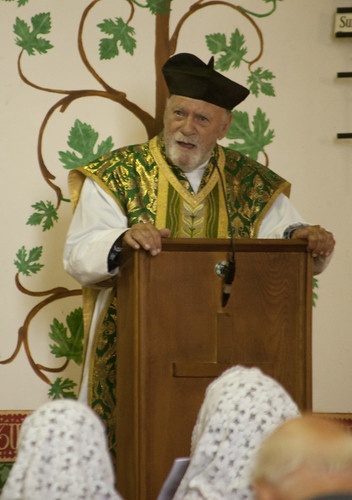
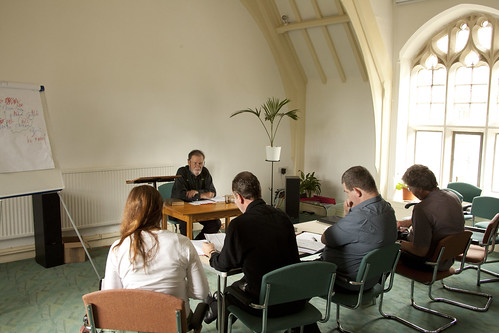
Fr John Hunwicke teaching at the LMS Latin Course in July.

On Latin as the language of the Church.
Since the Latin language is such, it was divinely foreseen that it should be something marvellously useful for the teaching Church, and that it should also serve as a great bond of unity for Christ’s more learned faithful; that is to say, by giving them not only something with which, whether they are separated by spatial location or gathered into one place, they might easily compare the respective thoughts and insights of their minds, but also – and this is greater – something with which they might understand more profoundly the things of mother Church, and might be united more closely with the head of the Church.
...And you might say with admiration that it was ready-made to serve the glory of the Roman Pontiff, to whom the very seat of Empire came as by a bequest.


Even the laity should study Latin
But if in any layman who is indeed imbued with literature, ignorance of the Latin language, which we can truly call the “catholic” language, indicates a certain sluggishness (apathy) in love towards the Church, how much more fitting it is that each and every cleric be adequately practised and skilled in that language! Their task is certainly to defend Latinity with all the more steadiness, aware as they are that it was with all the more violence that it was attacked by the adversaries of catholic wisdom who in the 16th century shattered Europe’s accord in a single doctrine of Faith.


Latin is necessary for the study of theology and philosophy.
we wish the alumni to be instructed very exactly in the Latin language, and also for this motive, in case, when they afterwards approach the higher disciplines which are certainly both to be handed on and to be received in Latin, it happens that through ignorance of the language they are unable to achieve full understanding of the doctrines, let alone to exercise themselves in those scholastic disciplines by which the talents of youths are sharpened for defending truth.
IMG_3899
Br Richard Bailey teaching at the LMS Latin Course

Lack of Latin throws seminarians to the mercy of second-rate modern theologians.
...that our clerics and priests, when they have not put enough effort into the study of Latin literature, by neglecting the copious volumes of the Fathers and Doctors of the Church in which the dogmas of the Faith are presented and are both set forth very lucidly and defended invincibly, seek for themselves a suitable supply of doctrine from more recent authors, in which not only does a clear kind of speech and an exact method of arrangement often scarcely usually exists, but also a faithful interpretation of dogmas is lacking. 


Another of Pope Pius XI's headaches was the rise of Italian Fascism, and he was not slow to condemn it as a form of paganism. It seems he has a little swipe at it in this document, promulgated just weeks before Mussolini's coup.

Mussolini and his Blackshirts march on Rome, October 1922
For the Church, since it both contains all nations in its embrace and is  also going to endure until the consummation of the ages, and it absolutely keeps the mob away from its governance, requires by its own nature a universal language, unchangeable, not that of the mob.

Monday, July 23, 2012

A forgotten Instruction on Patristics in Seminary

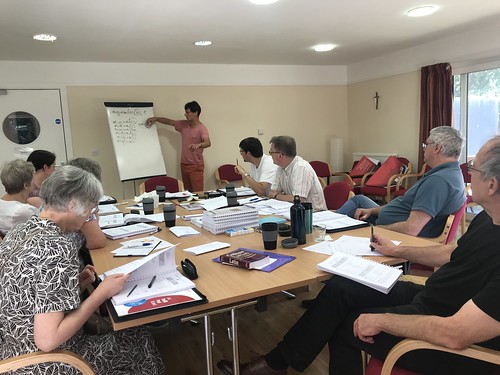
The Latin Fathers: Gregory, Augustine, Ambrose, Jerome
In 1989 the Congregation for Catholic Education, under the American Cardinal William Baum, published an Instruction, Inspectis dierum nostrorum, on the place of Patristics, the study of the Fathers of the Church, in seminaries. This document is available in the on-line version of the 'Acta Apostolicae Sedis' (82 (1990) 607-636) the official record of all curial documents, but only in Latin; it is available on the Congregation's page on the Vatican website, but only in Italian.

Is this someoe's idea of a joke? That a series of documents lamenting the fact that fewer and fewer people can read Latin, are available only in Latin? For this is not a one-off. Pius XI's decree on Latin in Seminaries Officiorum omnium, the hugely important 1962 Veterum Sapientia of John XXIII, Paul VI's Sacrificium laudis of 1966: all call for more Latin, and by an amazing coincidence the Vatican translators haven't bothered to put any of them into English - or any other vernacular language, except, bizarrely, Spanish for Veterum Sapientia, and Italian for Inspectis dierum and Sacrificium laudis. And what's this? They haven't got round to an official translation of Summorum Pontificum yet either, except into Hungarian.

Inspectis dierum is available on the website of the Bishops of the United States of America. This link appears to be broken from the main page but you can get the document here. It is a scan of a printed translation - better than nothing. Veterum Sapientia is available and thanks to the Latin Mass Society so is Sacrificium laudis.
Cardinal Baum

Not having English (or other vernacular) translations freely available is a pretty effective way of ensuring that no-one reads these documents, and asks any awkward questions about the education our seminarians are getting. I've heard that the translation of texts is not the task of the Congregation which produces them, but is overseen by the Secretariat of State, so this is an example of un-joined up thinking in the Curia.

Here are some key passages.

11: 'Furthermore these days many students of theology, evidently graduates of technical schools, do not have that knowledge of classical languages that is necessary for any one to undertake an investigation of the Fathers in a serious way. For this reason, the state of Patristic instruction in institutes of priestly education grievously suffers from those changes in the culture that are observed in a growing scientific and technological mentality that attributes greater importance to the teaching of the natural and human sciences to the neglect of the liberal arts.'

(What of Catholic schools? Don't they have an obligation to resist this trend against the liberal arts?)

53: 'The study of Patrology and of Patristics, which in its initial stage consists in outlining [the subject-matter], demands that manuals and other bibliographical resources be employed. When one arrives at difficult and involved questions of Patristic theology, however, none of these aids suffices: one has to go directly to the Fathers' very texts. For it behoves Patristics to be both taught and learned—especially in Academies and in specialized curricula—with professor and student going directly to the primary sources themselves. Nevertheless, because of the difficulties that often detain students, it will be opportune to place into their hands bilingual editions known to be scientifically reliable.'

(A counsel of despair: having insisted on the necessity of reading the texts in the original, the authors seem to acknowledge that this is practically unattainable. But this is so only because seminaries are not teaching the languages to a decent level.)

64: 'For the teaching of Patrology and Patristics in Institutes of priestly formation, those are to be preferred who have followed specialised studies in that subject in the Institutes established for the purpose—as in the Roman Patristic Institute called “the Augustinianum” or in the Pontifical Superior Institute of Latin (the Faculty of Christian and Classical Literature). This is because it is useful for the teacher to have been instructed in the ability to go directly to the sources themselves.'

(Note the concern here that even Patristics teachers won't have the languages.)


66: 'But it is clear that suitable instruments and resources are necessary to deal with Patristic studies properly. Such are libraries well stocked with respect to Patristics ('corpora' or collections, monographs, reviews or journals, dictionaries). And it is also clear that classical and modern languages are necessary as well. Since, however, the schools of our day and age are plainly deficient in the liberal arts, to the extent possible we shall have to further strengthen the study of Latin and Greek in our own Institutes of Priestly Formation.'

Popes and the Congregation for Education (and its former incarnations) have bemoaned the low level of clerical Latin, and called for improvements—culminating in Veterum Sapientia of February 1962 —since Leo XIII, himself echoing the alarm of the French bishop fifty-odd years earlier (in the 1830s!) when the French government-run schools dropped the Latin verse composition requirement.

Jacob's Spring, in the Holy Land

One of the watchwords of progressive theology of the Second Vatican Council era was 'ressourcement': 'going back to the sources'. This was a reaction to the over-use of textbooks in the bad old days. At least, in those days, the text books were usually in Latin, and as a result any seminarian could, with a bit of effort, read the original texts for himself if he wanted to, at least as far as Latin authors were concerned. Have we returned to the sources in seminary education? Alas no: most seminarians can't even understand the languages. Is reading a summary by a trendy modern theologian in the vernacular a good substitute? The Congregation for Catholic Education says NO!

If you want to know the ideal of pre-Conciliar seminary education, you need to read the document drawn up by the then Congregation for Seminaries which was to implement John XXIII's 1962 Veterum Sapientia, called Sacrum Latinae linguae depositum. But before you can hear what it says about the importance of learning Latin in order to read the Fathers, you know what you'll have to do? Learn Latin. That's the only language in which this document appears to exist. (You can find it in the online Acta: in the 1962 volume, ie vol. 54, it starts on p339.)
Tuesday, July 10, 2012

Missa touristica?

The weekend before last The Tablet published a letter whose tedium was nicely balanced by its absurdity. It began:

Recently we went to Venice to celebrate 25 years of marriage, and had a wonderful time visiting this extraordinary city with its remarkable hospitality. We attended Mass, and visited seven churches which as it happens were all offering Mass at some time in the day. It was lovely to hear the bells calling us to this prayer. But we were shocked at the Church’s inattentiveness to visitors. Venice welcomed 16 million tourists last year. The principal languages of the international visitors are German, English and French. We saw no evidence of any attempt in any church to explain anything about the Christian faith in any language except Italian. In fact, we saw only one church with information about the Christian faith. We saw no evidence of Mass being offered in any language except Italian. Hospitality? Well, at least some of the church guardians were polite as they took the entry fee.

The idea of the liturgical equivalent of the 'tourist menu', at the sight of which every self-respecting visitor flees from a restaurant, is alarming. The Tablet published my reply. As usual I highlight what they edited out.

Mr & Mrs Barton (Letters, 30 June) were disappointed to find Masses in Venice only in Italian. But it hardly seems attractive for Italian resorts to provide 'tourist Masses' in English and German. Do we really want to travel the world in a bubble with our fellow Anglophones?

What the Universal Church needs is a universal language. Funnily enough, it has one: Latin, a language 'friendly to all', as Pope John XXIII put it. On future visits, the Bartons will find the traditional Latin Mass being celebrated in Venice by an English-born, polyglot priest of the Fraternity of St Peter, Fr Konrad Loewenstein, at the Church of San Simon Piccolo. Googling 'FSSP Venice' will give them all the details.

I wonder why they removed the word 'polyglot'? Is it too long for Tablet readers? Fr Loewenstein, being born in England of a German family, and living in Italy, speaks several languages. The Fraternity of St Peter is a truly international order. Fr Loewenstein's father, Prince Rupert Loewenstein, is of course one of the Latin Mass Society's Patrons, a very long-standing supporter of the Society. May Fr Konrad's apostolate continue to flourish!

2009 06 27_3022_edited-1This isn't a brilliant photo of Fr Loewenstein, but I took it myself when I saw him at the FSSP Seminary at Wigratsbad, Bavaria, on the occasion of the ordination of another multi-lingual Englishman, Fr William Barker, in 2009. Fr Barker, too, is working in Italy, in Rome.

The FSSP Venice website is rather magnificent, it is one of those which bursts into song as soon as you download it. Pay them a visit!

Saturday, October 08, 2011

Attacks on the 1969 Mass

I have just blogged about Dom Sebastian Moore OSB complaining about 'calix' being translated 'chalice'; in the background is the issue that the Roman Canon actually says 'praeclarum calicem' - 'precious chalice' - and the translation Fr Moore prefers simply ignored the 'precious' bit and use the most prosaic word possible to render 'calix'. It similarly ignored the 'holy and venerable hands' which, in the Roman Canon, comes next.

What is at the bottom of this is, as I have said, an attack on the Roman Canon itself: the most important liturgical prayer of the Latin Church. The text of the new Novus Ordo missal is not an immediate issue for me or the Latin Mass Society, but the Roman Canon certainly is.

Fr Andrew Cameron-Mowat SJ is pulling the same trick, and it is clear this time. He likes the old translation of

'Domine non sum dignus ut intres sub tectum meum, sed tanto dic verbo et sanabitur anima mea'

simply as

'Lord I am not worthy to receive you, but only say the word and I shall be healed.'

The new translation says

'Lord I am not worthy to receive you under my roof, but only say the word and my soul shall be healed.'

His arguments evade the fact that the words 'under my roof' are simply a translation of the Latin words 'sub tectum meum'. Leave aside, for a moment, the issue of whether we want a more explicit reference to Matthew 8:8, or if that is too complicated, or indeed whether the faithful are too stupid to understand difficult words like 'soul'. The question is: do you want a translation of the Mass at all? The 1973 text simply does not translate the words 'sub tectum meum'. As a translation, it is a failure.

With that in mind, we come back to Cameron-Mowatt's arguments. These aren't arguments about felicity or fidelity of translation. They are arguments that this ancient Mass text (as Cameron-Mowatt observes, this particular Latin text is unchanged from the 1962 Missal) was liturgically defective, and that the 1973 translation was an improvement, not in style but in substance. It is interesting to see that he says that the text may have been appropriate in the context of a liturgical practice in which the faithful received communion only infrequently, so it would not have been defective in 1570, but was in 1970. (His argument as to why that is does not seem very clear to me, but let it pass.)

Obviously the 1969 Mass text, what was called the 'Missa Normativa' at the time, in Latin, was reformed in the context of the modern practice of frequent communion, and retained the full version of this particular text, including 'sub tectum meum'. Fr Cameron-Mowatt thinks that this was a mistake.

From time to time traditionalists are asked: do you attack the 1969 Mass? Do you accept its theological merits? Speaking for myself, and as a matter of LMS policy, the answer is: our concern is to do as the Holy Father has requested, which is to give a place of honour in the Church to the 'riches' represented by the Church's ancient liturgical tradition, not to engage in polemics about the reformed Missal. But here is someone, Fr Cameron-Mowatt SJ, who really is attacking the theological aptness of the Missa Normativa, and doing so from a liberal direction. Less explicitly, Fr Sebastian Moore is doing the same thing, and so are a whole gang of liturgists on the 'Pray Tell' blog and elsewhere, who are kicking up a stink about the new translation. In their view, clearly, Bugnini and his collaborators who put together the Latin text of the Novus Ordo got it badly wrong.

They were wrong to include the phrase 'pro multis'; they were wrong to include 'praeclarem calicem' (and maybe even the whole Roman Canon, as an option); they were wrong to include 'sub tectum meum' and to use the word 'anima' (soul); and so on in case after case. They were wrong in precisely those cases, I suppose, that they retained elements of previous editions of the Roman Missal in the new one. Insofar as there was continuity, there was error.

I begin to feel sorry for Archbishop Bugnini. Who is going to speak up for him, I wonder? But the bigger picture is that these liturgists are attacking the entire liturgical tradition of the Latin Church, even as represented by the post-conciliar editions of the Roman Missal. This is a fact which should be exposed.

(Pictures: Christ hearing the petition of the Centurion to heal his servant, by Veronese; Archbishop Annibale Buggnini.)

Friday, October 07, 2011

Is the Roman Canon vulgar?

This is a question posed, by implication, by Dom Sebastian Moore OSB, in a letter published in The Tablet last weekend (1st October).

The substitution of the word “chalice” for “cup” in the Eucharistic Prayer has already been noted. The unconscious vulgarity of this change, at the most dramatic moment in the whole liturgy, is horrifying, as though the dignity of the word “cup” were not upheld by the hands that held it and passed it round, and to “improve” on this is to make of another good word a genteelism which betrays the mentality of the translator – and three times! It confirms all that we now know, thanks to The Tablet’s preparatory articles, about the process whereby this translation was arrived at.

(Dom) Sebastian Moore OSB
Downside Abbey, Somerset


(That's his photo, from his blog.) They have published my reply:

Dom Sebastian Moore repeats yet again in your letters pages (1st October) the suggestion that the use of the word 'chalice' in the new translation of the Missal is wrong. It would be astonishing if he or anyone could seriously claim that 'he took the cup' is an accurate translation of 'accipens et hunc praeclarum calicem in sanctas ac venerabiles manus suas'. If the authors of the Roman Canon had wished to avoid what Fr Moore regards as 'vulgar' they would certainly not have used such flowery language, and substituted a more prosaic word like 'poculum' ('cup') for 'calix'.

It is clear that Fr Moore and your other correspondents are not objecting to the new translation at all, but to the Latin original. This has been used continuously by the Roman church since the time of Pope St Gelasius I, who died in the year 496. Alas, I think the consultation period may have closed.

Yours faithfully,

Joseph Shaw

Chairman, The Latin Mass Society

It makes no sense to suggest that the elevated language of the new missal translation is wrong but the even more elevated language of the original Latin is ok. As well as its frequent doubled adjectives ('holy and venerable') and other poetic tricks the Latin makes free use, for example, of archaism, which has not been allowed in the translation, exotic foreign words, and words only ever used in the context of Christian Latin. If the new translation is vulgar, the Roman canon must be utterly bourgeois.

The idea that only 'nobly simple' things avoid vulgarity, which rejects with disgust not only the Roccoco but the Gothic, which prefers the monotone to the melisma, is thankfully a fad passing away with Fr Moore's generation. It is small minded, petty, and parochial. What person of taste can tolerate only one style, and one, indeed, of only a handful of artists working in only a few decades corresponding to the formative period of their own lives?

Fr Moore's generation had their fun razing irreplaceable altars and dynamiting exquisite churches which they were incapable of understanding. He should allow the painful work of restoration go on without further interference.